


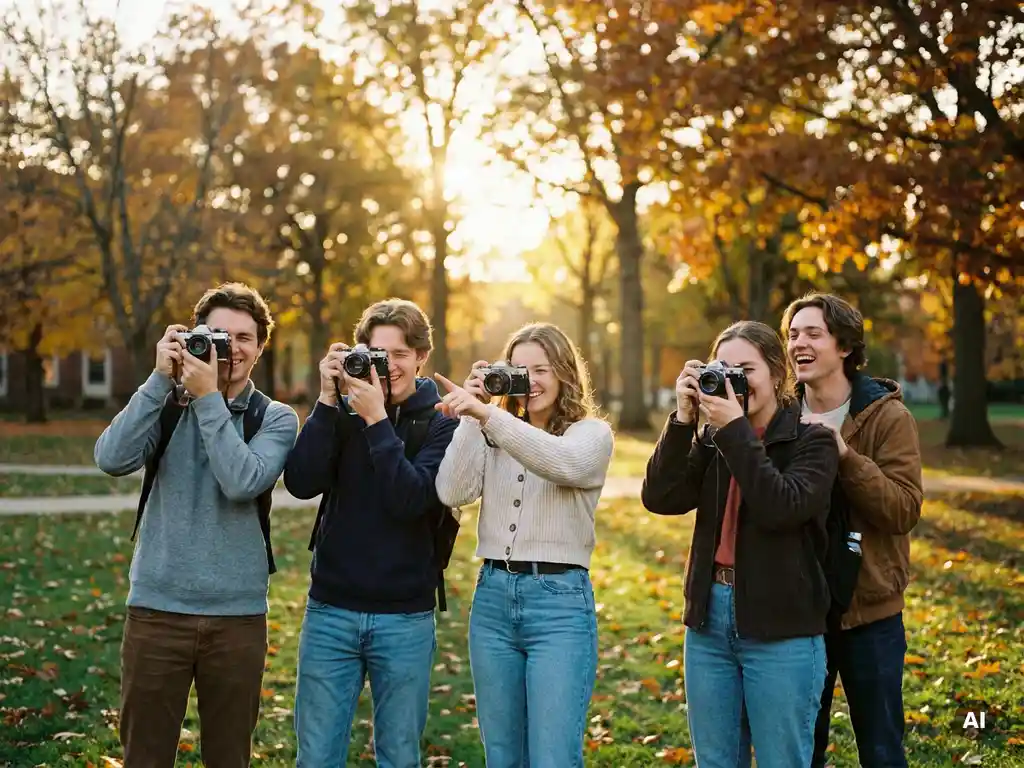
Photography clubs genuinely enrich the creative life of students by giving them a structured space to develop visual storytelling skills, connect with like-minded peers, and produce work that extends well beyond the classroom. The benefits are both immediate and lasting: students gain technical competence, creative confidence, and a collaborative mindset that shapes how they approach challenges across every area of their studies and careers. The questions below unpack exactly how that happens.
What skills do students actually develop in a photography club?
Students in a photography club develop a layered set of skills that combine technical craft with transferable intellectual abilities. On the technical side, members learn to operate camera equipment, manage lighting conditions, compose a frame, and edit images with purpose. Beyond the mechanics, the practice of photography builds visual literacy, attention to detail, and the ability to communicate complex ideas without words.
Critical thinking is at the heart of the photographic process. Before pressing the shutter, a photographer must make dozens of micro-decisions: what to include, what to exclude, what angle tells the truest story. Over time, this trains students to think analytically and to question how meaning is constructed, a skill that transfers directly into academic writing, research, and debate.
Peer critique sessions, which most student photography clubs hold regularly, add another dimension. Giving and receiving constructive feedback in a supportive environment builds communication skills and teaches students to articulate aesthetic and conceptual judgments. These are the same skills that underpin presentations, seminars, and collaborative projects in any academic setting.
How does a photography club build community on campus?
A photography club builds campus community by creating a shared creative purpose that draws students out of their individual academic silos and into genuine collaboration. Shared shoots, exhibitions, and editing sessions become social anchors, especially for students who are new to campus life or navigating an international environment for the first time.
Photography is inherently relational. Documenting campus events, interviewing fellow students for portrait projects, or collaborating on a themed photo series all require students to engage with people they might never encounter in a lecture hall. On a small, residential campus, this kind of cross-disciplinary mingling is particularly valuable because it reinforces the close-knit culture that makes the college experience feel like a genuine community rather than a collection of individuals.
Student-run clubs also develop leadership organically. Members take turns organising shoots, managing social media accounts, curating exhibitions, and coordinating with faculty or local venues. These responsibilities create a sense of ownership and belonging that deepens a student’s connection to campus life in a way that passive participation simply cannot replicate.
Can photography club experience support academic work?
Yes, photography club experience can directly support academic work, particularly in programmes that emphasise interdisciplinary thinking, research, and communication. Visual methods are increasingly recognised across academic fields as legitimate tools for data collection, analysis, and presentation, so students who are comfortable behind a camera bring a distinct and practical skill to group projects and independent research.
In fields like media, culture, and communication, the overlap is obvious: understanding how images shape public opinion, construct identity, and influence narrative is core academic content. But the connection extends further. Students studying environmental sustainability can use documentary photography to capture ecological change. Those exploring social issues can use photo essays as a form of community-engaged research. Even in data-heavy disciplines, strong visual communication skills help students present findings in ways that are accessible and persuasive.
The discipline required to complete a photographic project, from concept development through to a finished body of work, also mirrors the structure of academic research. Students learn to define a question, gather evidence, make interpretive choices, and present conclusions to an audience. That process builds habits of mind that serve them across every course they take.
What types of projects do student photography clubs typically run?
Student photography clubs typically run a mix of skill-building workshops, collaborative themed projects, documentary assignments, and public exhibitions. The specific mix varies by club, but most programmes cycle through activities that serve both beginners and more experienced members throughout the academic year.
Workshops and skill sessions
Regular workshops on topics like portrait lighting, street photography, long exposure, or post-processing software give members a structured way to build technical skills. These sessions are often led by more experienced members or invited practitioners, which creates a culture of peer mentorship within the club.
Themed projects and photo walks
Themed projects, where all members respond to a shared prompt or location, are a popular way to explore creative interpretation. A photo walk around the city with a brief like “borders” or “connection” produces a wide range of responses that spark rich discussion when members compare their approaches. These exercises develop creative flexibility and teach students that there is rarely one correct answer to a visual challenge.
Documentary and community assignments
Some of the most meaningful club projects involve documenting campus life, local events, or community initiatives. This type of work connects students to their surroundings and produces an archive that has genuine value for the institution and the people in it. On a campus embedded in a city like Middelburg, with its distinctive architecture, waterways, and cultural events, the photographic possibilities are particularly rich.
Exhibitions and public showcases
End-of-semester or end-of-year exhibitions give students a real audience for their work. Curating and presenting a body of photographs for public display is a significant step: it requires students to think about how their images communicate to people who have no prior context, and it builds the kind of professional confidence that comes from putting creative work into the world.
How does creative club involvement affect student wellbeing?
Creative club involvement, including participation in a photography club, has a measurable positive effect on student wellbeing by providing a reliable outlet for self-expression, reducing the sense of isolation that can accompany intensive academic study, and giving students a sense of identity and purpose beyond their coursework.
Photography in particular encourages students to slow down and pay attention. The act of looking carefully at the world, deciding what is worth capturing, and then reviewing and reflecting on those images is a mindful practice that counterbalances the pace and pressure of academic life. Many students describe photography as a way of processing their experiences, including the challenges of living abroad, navigating a new culture, or managing the emotional weight of a demanding programme.
The social dimension matters too. Belonging to a group with a shared interest provides a consistent source of connection that is distinct from academic relationships. When students know that Tuesday evening means a photo walk with friends, or that their images will be seen and discussed by people who genuinely care about the work, it anchors their week and reinforces a sense of belonging on campus.
Does joining a photography club help with career development?
Joining a photography club can meaningfully support career development, not only for students who want to work in creative industries but for anyone who needs to communicate visually, manage projects, or demonstrate initiative to future employers. The skills and experiences gained in a student photography club translate into concrete professional assets.
A curated portfolio of photographic work is a tangible output that students can present alongside their academic credentials. For roles in journalism, marketing, communications, design, research, or any field where visual storytelling matters, a strong portfolio signals both skill and creative commitment. Even in fields where photography is not central, the ability to produce high-quality visual content is increasingly valued.
Club leadership roles, such as organising events, managing a club budget, or coordinating an exhibition, demonstrate exactly the kind of practical competence that employers look for in graduates. These experiences show that a student can take initiative, work collaboratively, and deliver a project from idea to completion. Combined with the personal and professional development that a strong undergraduate programme provides, creative club involvement rounds out a graduate’s profile in ways that academic transcripts alone cannot.
For students interested in graduate study, photography club experience can also strengthen applications by demonstrating intellectual curiosity, the ability to work across disciplines, and a commitment to creative and critical thinking beyond required coursework.
How UCR supports creative student life alongside academic excellence
At University College Roosevelt, the connection between creative engagement and academic growth is built into the fabric of campus life. UCR’s small, residential community of around 500 students creates exactly the conditions in which student-led clubs like photography societies can thrive, because the campus is intimate enough for students to actually know one another and motivated enough to build something meaningful together.
- A close-knit international community of over 70 nationalities, giving photography clubs rich cultural material and diverse creative perspectives
- Guaranteed housing on a vibrant inner-city campus in Middelburg, which means students are always close to both their peers and the city’s distinctive visual environment
- An interdisciplinary liberal arts and sciences curriculum that naturally connects creative practice to academic clusters like Media, Culture and Communication, and Environment and Sustainability
- A mandatory Personal and Professional Development track that reinforces the transferable skills, such as communication, teamwork, and creative problem-solving, that photography club involvement also builds
- A student-led campus culture where clubs, events, and creative initiatives are genuinely encouraged and supported
If you are looking for a university where creative life and academic ambition reinforce each other, explore what life at UCR looks like and discover how to apply.
Related Articles
- Which Dutch student cities are most affordable for international students?
- How do you find student accommodation in the Netherlands?
- What is the cost of living for students in the Netherlands?
- What scholarships are available for studying in the Netherlands?
- What mental health support is available for students in the Netherlands?