


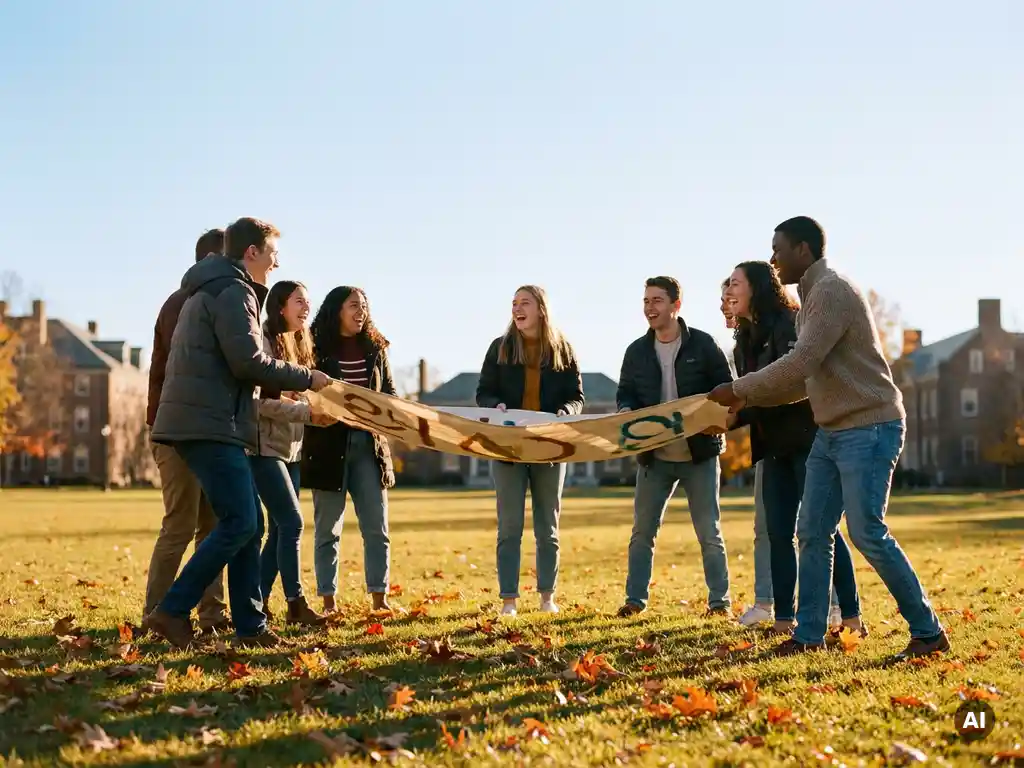
Student traditions shape campus culture over time by creating shared rituals that connect each new cohort to those who came before, building a continuous thread of identity and belonging. These traditions start small, often as spontaneous student-led moments, and gradually become embedded in the rhythm of college life. The questions below unpack exactly how that process works, from the first spark of a ritual to the lasting culture it creates.
How do student-led rituals become lasting campus traditions?
Student-led rituals become lasting campus traditions when they are repeated consistently, passed down organically between student generations, and carry genuine emotional meaning for the community. A ritual that begins as a spontaneous act, a shared meal before exams, a gathering spot after a big event, a welcome ceremony for new students, solidifies into tradition when enough people participate and choose to keep it alive.
The key ingredient is ownership. When students themselves initiate and maintain a ritual, it carries authentic meaning that top-down institutional programming rarely achieves. Over time, the ritual accumulates layers: stories, inside references, adaptations made by each new cohort. These layers are what transform a repeated activity into a living tradition.
What sustains a tradition across years is the act of transmission. Older students introduce newer ones to the ritual, explaining its origins and significance. This handover moment is itself a bonding experience, it signals to newcomers that they are now part of something larger than their individual time at the institution. Over successive years, the tradition becomes part of the college’s identity, something prospective students hear about before they even arrive.
What role do traditions play in building a sense of belonging?
Traditions build a sense of belonging by giving students a shared reference point, a set of experiences, symbols, and stories that signal membership in a community. When everyone on campus has participated in the same ritual, it creates an immediate sense of common ground, even among students who have never met.
Belonging is not something that happens automatically when a student moves into a dormitory or attends their first lecture. It develops through repeated, meaningful interaction. Traditions structure those interactions. They give students a reason to gather, a shared language to speak, and a collective memory to draw on. Research in higher education consistently shows that students who feel a strong sense of belonging are more academically engaged, more resilient during difficult periods, and more likely to complete their studies.
On a practical level, traditions also reduce the anxiety of transition. Starting university is disorienting. When a new student arrives and immediately encounters a welcoming ritual, whether a campus-wide orientation event, a student-run dinner tradition, or a particular way of marking the end of exams, they receive a clear signal: you are expected here, and there is a place for you in this community.
How does campus size affect the strength of student traditions?
Campus size has a direct impact on how strong and cohesive student traditions become. Smaller campuses tend to develop more intense, widely shared traditions because every student is likely to encounter the same rituals, know the same people, and participate in the same community spaces. On a large campus with thousands of students, traditions often fragment into faculty-specific or club-specific subcultures.
At a small college, a single tradition can genuinely involve the entire student body. When the community is compact enough that most people know each other by name, participation in shared rituals feels natural rather than optional. The tradition is not something happening on the other side of campus, it is happening in the courtyard where you eat lunch every day.
This is one reason why small liberal arts colleges are often noted for particularly strong campus cultures. With a few hundred students rather than tens of thousands, the conditions for deep, campus-wide traditions are far more favorable. Intimacy amplifies meaning: when a tradition involves people you genuinely know and care about, it carries far more emotional weight than a large-scale institutional event where you are surrounded by strangers.
What types of traditions are most common at liberal arts colleges?
The most common traditions at liberal arts colleges tend to center on intellectual community, cross-disciplinary exchange, and the rhythms of residential life. Because liberal arts colleges emphasize breadth, curiosity, and personal development, their traditions often reflect those values directly, blending academic celebration with social connection.
Common categories include:
- Academic milestone ceremonies: Traditions marking the beginning and end of the academic year, thesis defenses, or the completion of a major research project
- Interdisciplinary showcases: Events where students present work that crosses disciplinary lines, celebrating the breadth of a liberal arts education
- Community meals and gatherings: Regular shared dining traditions that reinforce the residential, communal nature of campus life
- Outdoor and place-based rituals: Traditions tied to specific campus locations, a particular courtyard, a historic building, or a nearby natural landmark
- Student-run cultural events: Festivals, performances, and debates organized by students that reflect the diversity of interests and backgrounds on campus
- Orientation rituals: Ceremonies or activities specifically designed to welcome new students into the community and introduce them to its values
What distinguishes liberal arts college traditions from those at larger research universities is their scale and intimacy. These are not stadium-sized spectacles but close, participatory rituals where individual students are visible and valued. The student life at UCR reflects this pattern well: in a community of around 500 students, every tradition has the potential to involve nearly everyone.
How do international student communities shape new campus traditions?
International student communities shape new campus traditions by introducing cultural practices, celebrations, and ways of gathering that were not part of the original campus culture. When students from many different countries live and learn together, their diverse backgrounds become a source of creative energy, generating traditions that reflect the community’s global character rather than any single national culture.
This process happens gradually and organically. A student group might organize a cultural food event that becomes an annual fixture. A holiday celebrated by one nationality gets adopted campus-wide because it resonates with the spirit of the community. A multilingual performance tradition emerges from a student talent show. Over time, these contributions accumulate into a campus culture that is genuinely international in character.
The presence of many nationalities also challenges traditions that might otherwise become insular. When students from over 70 different countries share a campus, any tradition that relies on a single cultural reference point will naturally evolve to become more inclusive. This creates a campus culture that is dynamic and self-renewing, constantly absorbing new influences while maintaining continuity through its core rituals.
For students considering a college where this kind of international exchange is central to daily life, the Bachelor of Liberal Arts and Sciences at UCR offers exactly this environment: a small, residential campus where students from across the world build shared traditions together.
Can campus traditions change or disappear over time?
Yes, campus traditions can and do change or disappear over time. Traditions are living practices sustained by the people who participate in them, not fixed institutional rules. When the student population shifts significantly, when the circumstances that gave rise to a tradition change, or when a tradition no longer resonates with the current community, it will naturally evolve or fade.
Change in traditions is not a failure, it is a sign that the community is alive and responsive. A tradition that adapts to reflect the current student body is healthier than one that is preserved mechanically out of obligation. The most enduring traditions are those flexible enough to absorb new meaning while retaining their core purpose.
Several factors can cause traditions to disappear entirely:
- A rapid turnover in student leadership that breaks the chain of transmission
- Physical changes to campus that remove the spaces where traditions took place
- A shift in student values that makes the original tradition feel irrelevant or exclusionary
- External disruptions, such as a global health crisis, that interrupt the cycle of participation for long enough that continuity is lost
Conversely, traditions can be deliberately revived. Former students often play a role in reintroducing practices that had lapsed, connecting current students to the college’s longer history. This cycle of loss and revival is itself part of how campus culture evolves: each generation decides which traditions are worth keeping, which need updating, and which new practices deserve to become traditions of their own.
How UCR helps students build meaningful campus traditions
UCR’s structure creates the ideal conditions for strong, lasting student traditions to take root and grow. Several features of the UCR experience directly support this:
- Small community scale: With around 500 students, every tradition has the potential to involve the whole campus, creating genuinely shared experiences rather than fragmented subcultures
- Guaranteed residential living: Students live on campus for the duration of their studies, which means the community is present and connected year-round, the essential condition for traditions to develop and be passed on
- Student-led campus culture: UCR’s active student organizations and committees give students the autonomy and infrastructure to create, organize, and sustain their own traditions
- International community: With over 70 nationalities represented, the campus is a constant source of new cultural influences, keeping traditions dynamic and globally informed
- Personal and Professional Development track: This mandatory programme builds the communication, teamwork, and community engagement skills that make students active contributors to campus life, not passive participants
If you want to be part of a campus community where student traditions are genuinely meaningful and shaped by the students themselves, discover the UCR experience and find out how to apply.
Related Articles
- What are the most popular cities for students in the Netherlands?
- What are the benefits of joining a debate club at university?
- What leadership opportunities exist within student associations?
- What are the benefits of living on a residential college campus?
- What do international students wish they had known before moving to the Netherlands?