


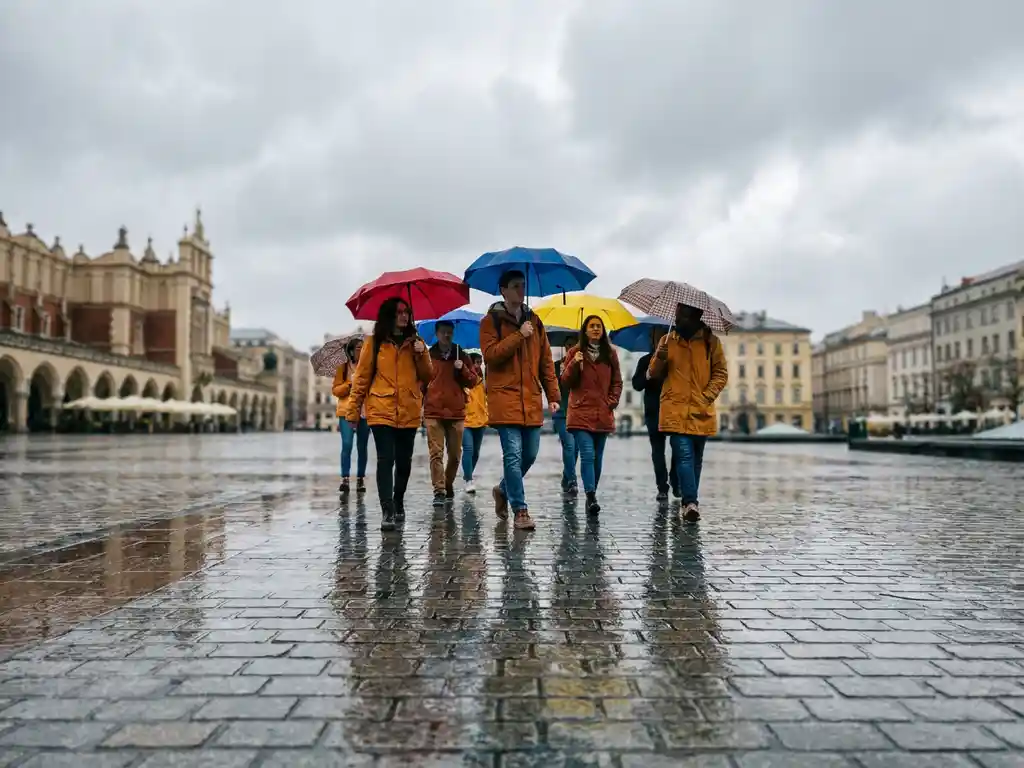
Dutch weather has a reputation that often precedes it, and for students arriving from warmer climates, the grey skies and persistent rain can feel like a genuine shock. The honest answer is that yes, the Netherlands is wetter and cloudier than most places in Southern Europe, Asia, or Africa, but it is far more manageable than the horror stories suggest. With the right mindset, the right gear, and a few practical habits, international students at places like UCR in Middelburg adjust surprisingly quickly and often come to appreciate what Dutch weather brings with it.
Is the weather in the Netherlands really as bad as people say?
The weather in the Netherlands is genuinely grey and rainy compared to warmer countries, but it is rarely extreme. The Netherlands receives around 750 to 800 millimetres of rainfall per year, spread fairly evenly across all seasons. Winters are mild rather than brutally cold, and summers can be genuinely pleasant, with long daylight hours and warm spells.
The bigger challenge for most international students is not the temperature but the overcast skies. The Netherlands sees relatively few hours of bright sunshine compared to countries in Southern Europe or the tropics, and the persistent cloud cover is what catches people off guard. Rain in the Netherlands also tends to come in short, frequent bursts rather than sustained downpours, which means you can get caught out multiple times in a single day.
Zeeland, where UCR is located, is actually one of the sunnier regions in the Netherlands. Its coastal position means it receives more sunshine hours per year than inland cities like Amsterdam or Utrecht, and the sea breezes keep the air fresh. So while the reputation of Dutch weather is not entirely undeserved, the reality for students in Middelburg is often better than expected.
What clothing and gear do you actually need for Dutch weather?
To live comfortably through rainy Dutch weather, you need a good waterproof jacket, a sturdy bike, and layers you can mix and match. These three things will carry you through most of what the Netherlands throws at you, regardless of the season.
Here is what international students consistently find most useful:
- A proper waterproof jacket with a hood, not just a water-resistant one. Dutch rain is light but frequent, and a jacket that soaks through within ten minutes will make daily life miserable.
- Waterproof trousers or overpants if you cycle regularly, which most students in Middelburg do.
- Layering basics such as thermal underlayers, fleece mid-layers, and a warm outer layer for winter months between November and February.
- Waterproof shoes or ankle boots that can handle wet pavements and puddles without soaking through.
- A good umbrella, though experienced residents quickly learn that wind makes umbrellas unreliable. A hood is almost always more practical.
- A reliable bicycle with mudguards and ideally a rain cover for your bag. Cycling is the primary way people get around in the Netherlands, and doing it in the rain is a skill worth developing early.
The key principle is to invest in quality from the start rather than buying cheap gear that fails when you need it most. Many students from warmer countries underestimate how much time they will spend outdoors in all weather conditions, and being underprepared makes the adjustment to Dutch weather much harder than it needs to be.
How does grey weather affect your mood, and what can you do about it?
Extended periods of grey, overcast weather can genuinely affect your mood, energy levels, and motivation. This is a well-recognised phenomenon linked to reduced sunlight exposure, and it is something many international students experience during their first autumn and winter in the Netherlands. Acknowledging it is the first step toward managing it effectively.
The most common effects include lower energy in the mornings, reduced motivation to go outside, and a general sense of flatness that is distinct from clinical depression but worth taking seriously. Students from tropical or Mediterranean climates often find the shift most pronounced between October and February, when daylight hours shorten significantly.
Practical strategies that genuinely help include:
- Getting outside during daylight hours, even briefly. Natural light, even on cloudy days, is far more effective than indoor lighting at regulating your body clock and mood.
- Maintaining a consistent routine with regular sleep, meals, and physical activity. Structure helps counteract the low-energy drift that grey weather can bring.
- Staying socially active. A close campus community like the one at UCR means there are always people around, events happening, and reasons to leave your room.
- Using a daylight lamp in your room during dark mornings. These are widely available in the Netherlands and can make a noticeable difference for people sensitive to light changes.
- Planning things to look forward to, whether that is a weekend trip, a campus event, or simply a meal out with friends. Anticipation itself has a positive effect on mood.
The good news is that most students find the adjustment becomes much easier after the first winter. Once you have lived through it once and built the habits and social connections that sustain you, subsequent winters feel far less daunting.
How do UCR students from warm countries actually adapt to Zeeland’s climate?
Students from warm countries who study at UCR in Middelburg adapt to Zeeland’s climate primarily through community, routine, and a shift in perspective about what outdoor life looks like. The residential campus model plays a significant role in making this transition smoother than it would be at a larger, more dispersed university.
Because all UCR students live on campus in Middelburg, there is a built-in social infrastructure that keeps people connected even when the weather discourages going out. Shared meals, study spaces, campus events, and the general proximity of 500 students from over 70 nationalities means there is always something happening and always someone to spend time with. Adjusting to Dutch weather becomes a collective experience rather than a solitary one, and that shared humour around the rain is itself a bonding mechanism.
Students also find that Zeeland’s coastline becomes an unexpected resource. The beaches and sea paths around Middelburg are accessible year-round, and walking or cycling along the coast on a crisp, clear winter day offers a kind of dramatic beauty that students from warmer countries often do not anticipate. Zeeland’s outdoor landscape rewards those who engage with it regardless of the season.
The interdisciplinary curriculum at UCR also keeps students intellectually engaged and socially busy in ways that make the weather feel like background noise rather than a central problem. When your days are full of seminars, projects, community engagement activities, and campus life, you are rarely sitting still long enough for the grey skies to dominate your experience.
What are the unexpected upsides of living through a Dutch winter?
Living through a Dutch winter as an international student comes with genuine upsides that are easy to miss when you are focused on the cold and rain. The experience builds resilience, creates a distinctive shared culture, and often produces some of the most memorable moments of a student’s time abroad.
Some of the most commonly cited unexpected benefits include:
- A stronger sense of community. Cold, dark evenings naturally push people indoors together. On a residential campus, this translates into long dinners, spontaneous film nights, and deeper conversations that simply would not happen if everyone scattered to terraces and parks.
- Appreciation for small pleasures. A sunny day in March feels genuinely joyful after months of grey. Students from warm countries often report that living in the Netherlands recalibrates their relationship with sunshine and outdoor time in a way they find surprisingly meaningful.
- Practical resilience. Cycling in the rain, navigating grey days, and maintaining energy and focus through a northern European winter are things that build genuine adaptability. These are exactly the kinds of transferable life skills that serve students well beyond their degree.
- A different relationship with nature. Zeeland’s coastal landscape in winter is dramatic and beautiful in ways that are entirely different from summer. Storms, sea mist, and the wide open skies of the Dutch coast offer an aesthetic experience that many students come to love.
- Cosy indoor culture. The Dutch concept of gezelligheid, a kind of warm, convivial togetherness, is never more relevant than in winter. Learning to embrace it is one of the small cultural shifts that makes living in the Netherlands as an international student genuinely enriching.
How UCR helps you settle into life in the Netherlands
Adjusting to Dutch weather is just one part of settling into life as an international student in the Netherlands. UCR is specifically designed to support that transition at every level:
- Guaranteed housing on campus in Middelburg means you are never navigating the Dutch rental market alone, and you are immediately embedded in a community from day one.
- A close-knit international community of around 500 students from over 70 countries means you will find others who understand exactly what adjusting to a new climate and culture feels like.
- Dutch language courses for international students help you connect with local culture and feel more at home in everyday life in Zeeland.
- A Personal and Professional Development programme that builds the resilience, adaptability, and self-awareness that make transitions like this manageable.
- A campus in Zeeland, one of the sunniest regions in the Netherlands, with coastline, outdoor spaces, and a historic city centre to explore year-round.
If you are curious about what studying at UCR looks and feels like, the best next step is to speak directly with the team. Connect with UCR to ask your questions, hear from current students, and find out whether this community is the right fit for you.
Related Articles
- How does community-engaged learning work at university?
- What is it like living in Middelburg as an international student in 2026?
- How do you get around Middelburg without a car as a student?
- What should you do in your first week after arriving in the Netherlands as a student?
- What support systems exist for international students adjusting to life in the Netherlands?