


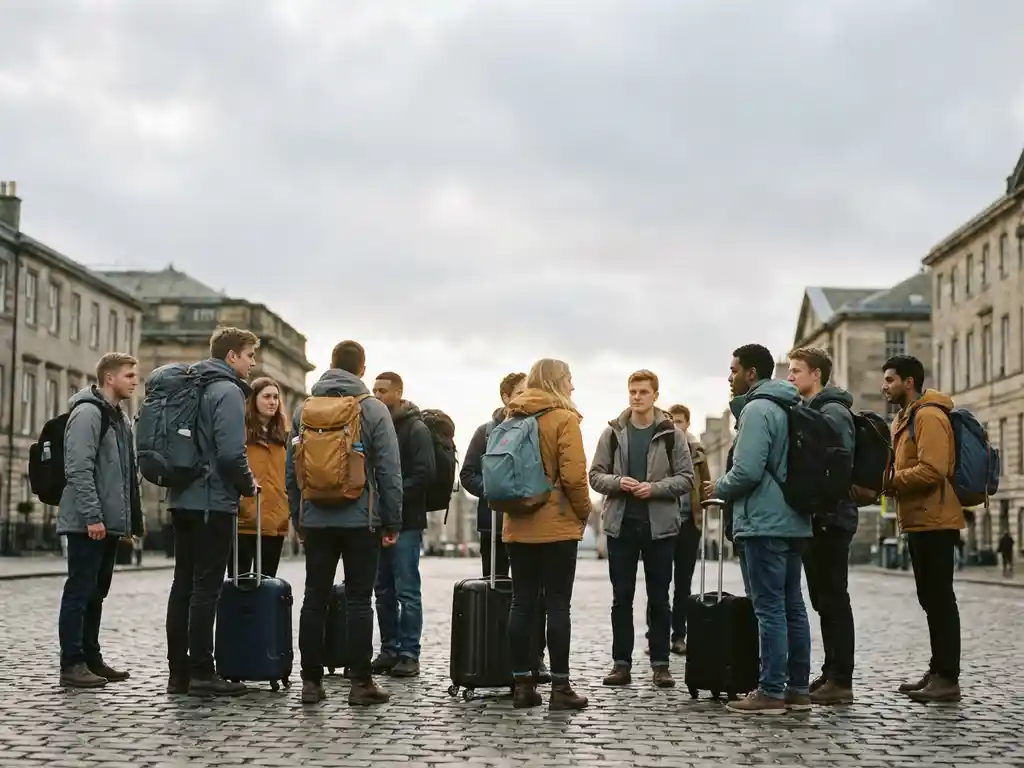
When moving to the Netherlands for university, pack clothing suited to a cool, rainy climate, essential documents, your most important electronics, and personal items that are hard to replace abroad. Keep your luggage focused: the Netherlands has excellent shops, so you can buy most everyday items after you arrive. This guide walks through every key packing question international students ask before making the move.
What do Dutch students typically bring to university?
Dutch students moving to university typically bring bedding, a bicycle, kitchen basics, and personal care items. Because most Dutch students have grown up close to shops and are familiar with local stores, they tend to pack light and buy what they need once they settle in. For international students, understanding this local habit is a useful starting point.
In a residential college setting, where housing is provided on campus, Dutch students generally bring:
- A set of bed linen and a duvet suited to colder months
- A sturdy bicycle for daily transport around the city
- A laptop and any course-specific stationery
- A few kitchen essentials such as a mug, cutlery, and a plate
- Personal care products and a basic first aid kit
International students can use this as a baseline and then layer on the additional items covered in the sections below. The key principle is the same: bring what is hard to find or expensive abroad, and leave behind what is widely available in Dutch supermarkets and shops.
What documents should international students bring to the Netherlands?
International students moving to the Netherlands for university must bring their passport, university admission letter, health insurance documentation, and any visa or residence permit paperwork. These documents are essential for registration, housing check-in, and opening a Dutch bank account. Losing access to them can delay your entire start to the academic year.
Organise your documents into two categories: originals and certified copies.
Essential original documents
- Valid passport (check the expiry date well before departure)
- University enrolment or admission letter
- Residence permit or entry visa, if applicable to your nationality
- Health insurance certificate or European Health Insurance Card (EHIC) for EU students
- Proof of financial means, such as a bank statement or scholarship letter
- Secondary school diploma or transcript (original or certified copy)
Documents to store digitally as backup
- Scanned copies of all originals saved to cloud storage
- Emergency contact information for your university’s international office
- Your accommodation confirmation and any rental agreement
- Travel insurance policy details
Keep physical originals in a waterproof folder in your hand luggage, never in checked baggage. You will need your passport and enrolment letter almost immediately upon arrival for municipality registration, which is a legal requirement for all students staying in the Netherlands longer than four months.
What clothes should you pack for the Netherlands climate?
Pack layers, waterproof outerwear, and warm footwear for the Netherlands climate. The Dutch weather is famously changeable: mild summers, cold and wet winters, and rain possible in any month. A good waterproof jacket is arguably the single most important clothing item you can bring.
The Netherlands sits in a temperate maritime climate zone, which means temperatures rarely reach extremes in either direction but wind and rain are near-constant companions. Middelburg, located on the Zeeland coast, is particularly exposed to Atlantic weather, so wind chill can make cooler days feel significantly colder than the thermometer suggests.
A practical clothing list for the Netherlands includes:
- A high-quality waterproof jacket with a hood (this is non-negotiable)
- Waterproof or water-resistant ankle boots or shoes
- Thermal base layers for winter months (October through March)
- A warm mid-layer such as a fleece or knitted jumper
- A scarf, gloves, and a warm hat
- Lightweight layers for warmer days in spring and early autumn
- Comfortable clothes for campus life and social events
Avoid packing heavy winter coats from very cold climates as they are often too warm for Dutch winters, which hover around 3 to 7 degrees Celsius rather than dropping to severe frost. A good mid-weight waterproof layer will serve you far better throughout the year.
What electronics and tech items are essential for university in the Netherlands?
The essential electronics for university in the Netherlands are a reliable laptop, a universal power adapter, and a smartphone with European roaming or a local SIM. The Netherlands uses the Type F (Schuko) plug and runs on 230V electricity, so check your device compatibility before you travel.
Most university coursework, research, and communication happens digitally, so your laptop is your most critical tool. Bring the device you know well rather than buying a new one abroad, where you may face higher prices or a different keyboard layout.
- Laptop: Bring your own, fully charged, with your operating system set to your preferred language
- Power adapter: A universal EU adapter or a Type F adapter for all your devices
- Voltage converter: Check whether your devices are dual-voltage (100-240V); most modern laptops and phone chargers are, but some hair tools and shavers are not
- Portable charger: Useful for long days on campus or during travel
- Noise-cancelling headphones: Helpful for studying in shared spaces
- External hard drive or USB: For backing up coursework and research files
A local Dutch SIM card is easy and affordable to buy after arrival, so there is no need to sort this out before you leave. Providers such as Ben, Lebara, and Simyo offer prepaid options that work well for students.
What should you leave at home when moving to the Netherlands?
Leave behind bulky appliances, excessive clothing, and items you can buy cheaply in Dutch supermarkets. Overpacking is one of the most common mistakes international students make, and it creates unnecessary stress during travel and limited storage space once you arrive in student accommodation.
Specific items that are not worth bringing include:
- Large kitchen appliances: Toasters, kettles, rice cookers, and coffee machines are inexpensive at Dutch stores such as HEMA, Blokker, or Action
- Excessive bedding: Bring one set and buy additional items locally if needed
- Heavy textbooks: Many course readings are available digitally or through the university library; check your reading list before packing any books
- Region-locked electronics: DVD players or gaming consoles locked to a different region may not work with Dutch content or TV systems
- Too many formal clothes: Campus life in the Netherlands is generally casual; one or two smart outfits are sufficient
- Cleaning and laundry products: These are widely available and inexpensive locally
The guiding question to ask yourself for each item is: can I buy this easily and affordably in the Netherlands within the first week? If the answer is yes, leave it at home.
What can you easily buy after arriving in the Netherlands?
After arriving in the Netherlands, you can easily buy bedding, kitchen supplies, toiletries, stationery, bicycles, and most everyday household items. Dutch cities are well-served by affordable shops, and Middelburg has supermarkets and stores within easy reach of campus.
The Netherlands has a strong retail infrastructure for students. Budget-friendly chain stores make it straightforward to furnish and equip your student room without spending a lot of money.
- Supermarkets (Albert Heijn, Jumbo, Lidl): Food, toiletries, cleaning products, and basic kitchen items
- HEMA: Affordable bedding, towels, stationery, and small appliances
- Action: Very low-cost household goods, storage solutions, and personal care products
- Marktplaats (Dutch equivalent of eBay): Second-hand bicycles, furniture, and electronics at student-friendly prices
- Bol.com: The main Dutch online retailer for electronics, books, and almost everything else
One item worth prioritising early is a bicycle. Cycling is the primary mode of transport for students in the Netherlands, and buying a reliable second-hand bike within your first week will make a significant difference to your daily life. Middelburg is compact and easily navigable by bike, making it one of the most practical purchases you will make during your studies.
How UCR helps you settle in from day one
University College Roosevelt makes the transition to life in the Netherlands as smooth as possible for incoming international students. Rather than arriving in an unfamiliar city and figuring things out alone, UCR students benefit from a structured, supportive start:
- Guaranteed on-campus housing for all students throughout their studies, removing the stress of finding accommodation in a competitive rental market
- A close-knit international community of around 500 students from over 70 countries, so you will find peers navigating the same experience from day one
- Dutch language courses available to international students as part of the curriculum, helping you settle into Dutch culture and everyday life more quickly
- A Personal and Professional Development programme that builds practical life skills including adaptability and communication, which are directly relevant to thriving in a new country
- A residential campus in the heart of Middelburg, putting shops, the train station, and local amenities within easy walking or cycling distance
If you are preparing to move to the Netherlands and want to know more about what student life looks like at UCR, the UCR admissions team is ready to answer your questions. You can also explore the full academic programme to understand what to expect before you arrive, or visit the UCR homepage to get a broader picture of life on campus.
Related Articles
- Are A-levels accepted by Dutch university colleges?
- Can international students find part-time jobs in Middelburg?
- How does the Dutch directness affect international students socially?
- How do you build a social life in a small university town like Middelburg?
- What is the difference between EU and non-EU student requirements in the Netherlands?