


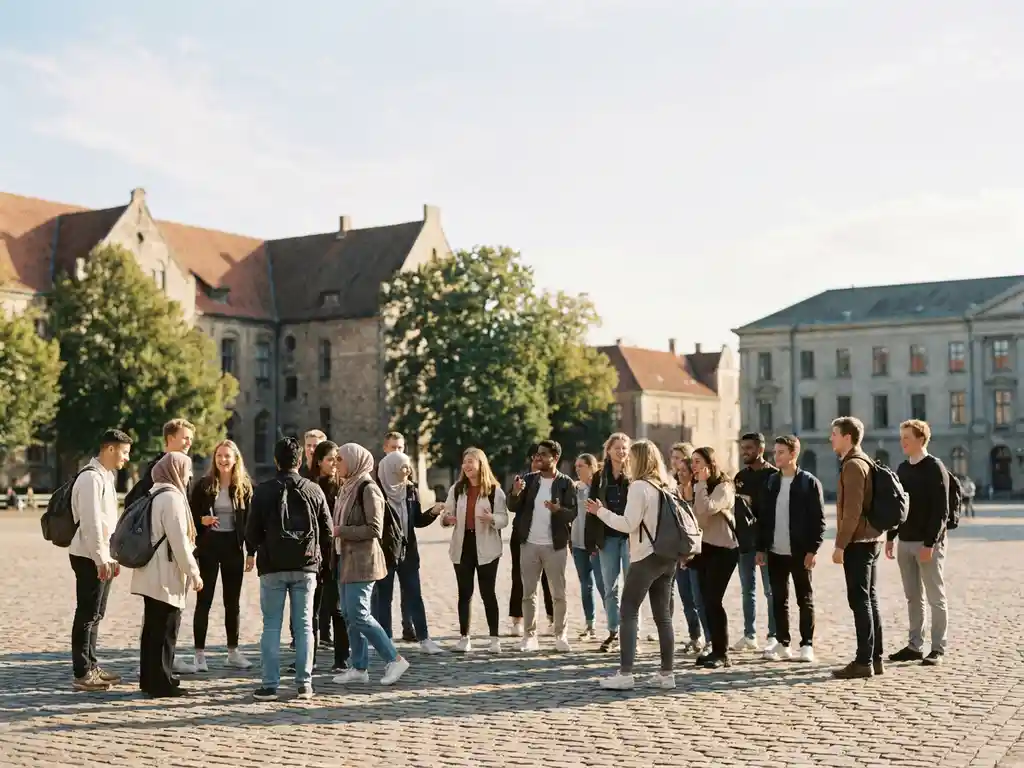
Studying in the Netherlands as an international student is a genuinely rewarding experience. The country offers a welcoming, internationally minded culture, a high standard of living, and some of Europe’s most innovative universities. Whether you are drawn by English-taught programmes, affordable tuition compared to the UK or US, or the chance to live in a country that consistently ranks among the happiest in the world, the Netherlands delivers on most fronts. This article breaks down the most common questions prospective students ask before making the move.
What is daily life like for international students in the Netherlands?
Daily life as an international student in the Netherlands is structured, social, and surprisingly manageable from day one. Dutch cities are built around cycling, public transport is reliable, and most administrative processes have English-language options. International students generally find the country easy to navigate, even before they pick up any Dutch.
A typical student day in the Netherlands blends academic commitments with a rich social environment. Lectures and seminars tend to be interactive rather than purely lecture-based, with professors encouraging debate and critical thinking. Outside the classroom, students cycle to the market, join student associations, and gather in common areas for informal discussion. The Dutch approach to education values independence, so you are expected to take ownership of your schedule and workload from the start.
The pace of life varies significantly depending on where you study. Larger cities like Amsterdam move quickly, while smaller university towns offer a calmer, more community-oriented rhythm. In either setting, the Netherlands’ excellent infrastructure means that travel between cities is fast and affordable, so students rarely feel isolated from the broader country.
How easy is it to make friends as an international student in the Netherlands?
Making friends as an international student in the Netherlands is generally straightforward, largely because Dutch universities attract a highly diverse, internationally minded student body. Most programmes taught in English draw students from dozens of countries, which means the social environment is already oriented toward inclusion and cross-cultural connection from the first week.
Orientation weeks, student associations, sports clubs, and shared housing all create natural opportunities to meet people. The Dutch themselves tend to be direct and open, which can feel refreshing once you understand that their candour is not unfriendliness. That said, building deeper friendships with Dutch students can take a little more time, as social circles in the Netherlands are often well-established before university begins.
The easiest friendships to form early on are typically with fellow international students who are in the same position as you. Residential campuses accelerate this process considerably, since you share meals, study spaces, and downtime with the same group of people from day one. At a college like UCR, where all students live on campus in Middelburg, the close-knit environment of around 500 students from over 70 nationalities means that social bonds form quickly and tend to run deep.
What are the biggest cultural differences international students notice?
The cultural differences international students most commonly notice in the Netherlands include the Dutch commitment to directness, a strong cycling culture, a deeply egalitarian social attitude, and an emphasis on planning and punctuality. These traits shape everyday interactions in ways that can surprise students from more hierarchical or indirect communication cultures.
Directness and egalitarianism
Dutch people are famously straightforward. Feedback is given honestly, disagreement is expressed openly, and formality between students and professors is minimal. For students from cultures where indirect communication is the norm, this can feel blunt at first. Over time, most international students come to appreciate the clarity it brings to academic and social interactions.
Cycling and sustainable living
The Netherlands has more bicycles than people, and cycling is not just a leisure activity but the primary mode of transport for most students. Buying a second-hand bike is one of the first things most international students do after arriving. This connects to a broader Dutch cultural value around sustainability and practicality that also shows up in how universities approach environmental topics and community responsibility.
The Dutch also tend to plan social events well in advance. Spontaneous visits or last-minute invitations are less common than in some other cultures, and scheduling is taken seriously. Adapting to this rhythm usually takes a few weeks but quickly becomes second nature.
How affordable is student life in the Netherlands compared to other European countries?
Student life in the Netherlands is moderately affordable by Western European standards. Tuition fees for EU students are regulated and significantly lower than in the UK, while non-EU fees are competitive with other internationally recognised European destinations. Day-to-day living costs, including food, transport, and leisure, are reasonable, particularly outside of Amsterdam.
Groceries in the Netherlands are generally affordable, and Dutch supermarkets like Albert Heijn and Lidl offer good value. Public transport is subsidised for students through the OV-chipkaart system, and cycling eliminates many short-distance travel costs entirely. Eating out is more expensive in city centres, but student canteens and cooking at home keep costs manageable.
Compared to studying in the UK, Scandinavia, or Switzerland, the Netherlands represents good value. Compared to Southern or Eastern Europe, costs are higher, but this is offset by the quality of infrastructure, healthcare access, and the internationally recognised credentials Dutch universities provide. Financial support options, including scholarships and grants, are available at many institutions for both EU and non-EU students, so it is worth researching these early in the admissions process.
What should international students know about housing in the Netherlands?
Housing is one of the most important practical challenges for international students in the Netherlands. In major cities like Amsterdam, Utrecht, and Delft, the rental market is extremely competitive, with high demand and limited supply driving rents up significantly. International students who rely on finding private accommodation after arrival often struggle, and this is one area where advance planning is essential.
Most Dutch universities offer some form of student housing, but availability is not always guaranteed and waiting lists can be long. This makes housing policy a meaningful differentiator when choosing where to study. Some institutions, particularly smaller residential colleges, guarantee housing for all enrolled students for the full duration of their studies.
At UCR, for example, guaranteed housing is a core part of the student offer. Every student lives on the residential campus in Middelburg for the entirety of their degree, which removes the stress of navigating the Dutch rental market entirely. Beyond the practical benefit, living on campus creates a community dynamic that is difficult to replicate in a city where students are scattered across different neighbourhoods.
For students considering universities in larger Dutch cities without guaranteed housing, it is advisable to begin searching for accommodation as early as possible, ideally before the application process is complete. University housing offices and student housing platforms are the most reliable starting points.
How does studying in a small Dutch city compare to studying in Amsterdam or Rotterdam?
Studying in a small Dutch city offers a fundamentally different experience from studying in Amsterdam or Rotterdam. Smaller cities tend to provide a tighter community, lower living costs, easier navigation, and more direct access to local institutions and opportunities. Larger cities offer more urban variety, a wider social scene, and greater anonymity, but can also feel overwhelming and expensive for students arriving from abroad.
In Amsterdam or Rotterdam, the student population is large and dispersed. You might attend a lecture with hundreds of peers and rarely see the same faces twice. The city itself is a constant source of stimulation, but building a genuine sense of belonging within your university can take longer. Housing costs in these cities are also among the highest in the Netherlands.
In a smaller city like Middelburg, the dynamic shifts. The community is more concentrated, lines between students, faculty, and local residents are shorter, and the city itself becomes part of the learning environment. Zeeland, the province where Middelburg is located, offers coastline, historic architecture, and a pace of life that many students find genuinely restorative alongside their studies. The region’s scale also means that students at UCR can engage directly with local government, businesses, and community organisations in ways that would be harder to arrange in a major metropolitan university.
The trade-off is access to big-city amenities. Students in smaller cities may need to travel to Rotterdam or Antwerp for certain cultural events or specialist services. However, the Netherlands’ rail network makes this straightforward, and many students find that the depth of community they build in a smaller setting more than compensates.
How UCR supports international students living and studying in the Netherlands
University College Roosevelt is designed specifically to make the experience of studying in the Netherlands as an international student as rewarding and well-supported as possible. For students who want a genuinely immersive, community-driven experience in a small Dutch city, UCR addresses many of the key challenges outlined in this article directly:
- Guaranteed housing for all students for the full duration of their studies, removing the stress of the Dutch rental market entirely
- A fully English-taught Liberal Arts and Sciences programme with a selective admissions process that brings together talented, motivated students from around the world
- A residential campus of around 500 students from over 70 nationalities, making it easier to build genuine friendships quickly
- Dutch language courses included in the curriculum to help international students settle into Dutch culture and society
- A Personal and Professional Development track that builds communication, adaptability, and practical life skills alongside academic study
- Direct access to interdisciplinary programmes across six clusters, with the flexibility to design your own degree path
If you are weighing up your options as an international student considering the Netherlands, UCR offers a distinctive alternative to large urban universities. Connect with the UCR admissions team to ask your questions and find out whether this community is the right fit for you.
Related Articles
- What are the best universities in the Netherlands for international students?
- What are the biggest challenges of studying in the Netherlands?
- How do you balance academics and extracurricular activities at college?
- How does participating in campus life prepare students for the real world?
- How do students balance social life and academic pressure at a residential college?