


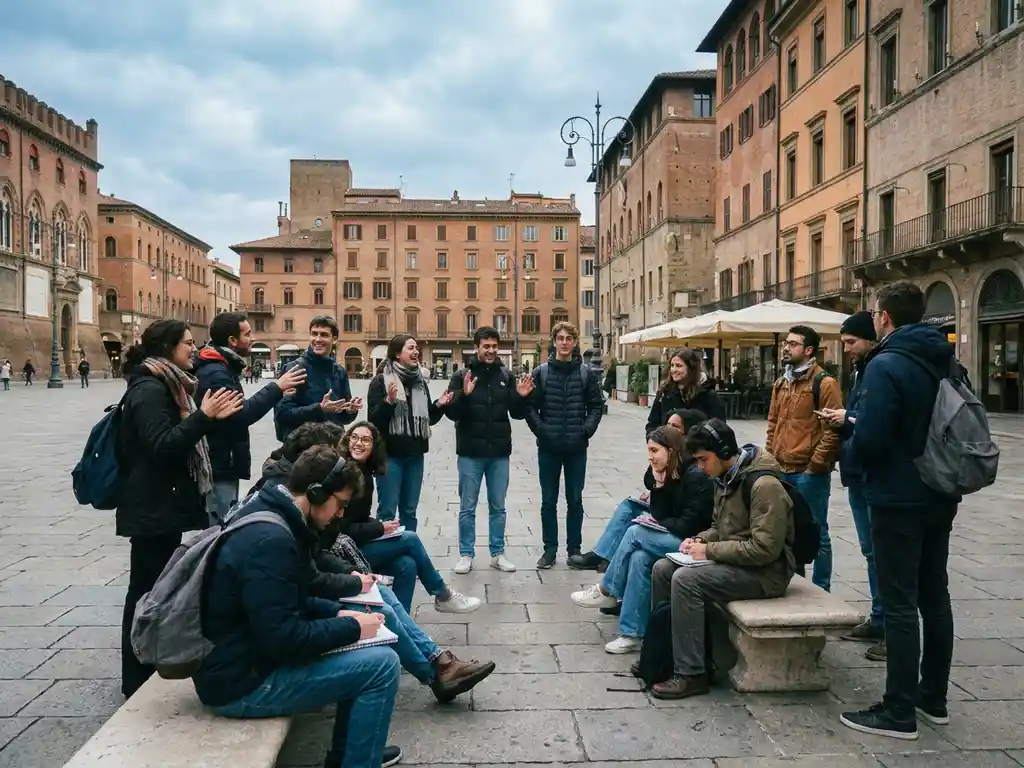
Dutch culture shock is real, and most international students experience it when studying in the Netherlands. It typically shows up as surprise at how direct Dutch people are, confusion about social norms, and a general disorientation that comes with living in an unfamiliar culture. The good news is that culture shock in the Netherlands tends to resolve faster than in many other countries, especially when students are embedded in a supportive academic community. The sections below answer the most common questions international students have about adjusting to Dutch culture.
What do international students find most surprising about Dutch culture?
The biggest surprises for international students in the Netherlands are Dutch directness, a strong culture of independence, and the practical, no-nonsense approach to daily life. Students from cultures where politeness involves softening feedback or avoiding disagreement often find the Dutch style jarring at first. Cycling everywhere, the flat landscape, and the unpredictable weather also catch many newcomers off guard.
Beyond communication style, a few other cultural features stand out:
- Scheduled socializing: Dutch people often plan social events well in advance and rarely drop by unannounced. Spontaneous visits are uncommon, which can feel cold to students from more informal cultures.
- Going Dutch: Splitting bills equally is standard practice. Do not expect someone to pick up the tab as a gesture of hospitality.
- Cycling as a way of life: Bikes are not a hobby or a weekend activity. They are the primary mode of transport, and navigating cycle paths as a pedestrian takes some getting used to.
- Pragmatism over formality: Dutch institutions, including universities, tend to be less hierarchical than in many other countries. Professors are often addressed by their first name, and students are expected to voice opinions freely.
These differences are not negative, but they require adjustment. Students who arrive expecting the Netherlands to feel like a familiar Western country are often the most surprised, because the cultural gap is subtle rather than obvious.
Why is Dutch directness so hard to adjust to?
Dutch directness is difficult to adjust to because it conflicts with communication norms that most people have spent their entire lives learning. In many cultures, criticism is delivered indirectly, disagreement is softened, and saying “no” outright is considered impolite. Dutch communication does none of that, and the contrast can feel blunt or even rude before students understand the cultural logic behind it.
In the Netherlands, directness is not considered aggressive. It is seen as respectful. The reasoning is that telling someone the truth, even an uncomfortable truth, treats them as a capable adult. Sugarcoating feedback is viewed as condescending or even dishonest. Once international students understand this framing, the same comment that initially felt like a personal attack starts to feel like genuine engagement.
The adjustment is harder for students from high-context cultures, where meaning is conveyed through tone, context, and implication rather than explicit words. In those settings, what is not said carries as much weight as what is said. Dutch communication is almost entirely low-context, meaning people say what they mean and expect others to do the same.
The practical advice most experienced international students offer is to resist the instinct to interpret Dutch directness as hostility. Ask clarifying questions, engage in the same straightforward way, and notice that Dutch people are rarely offended when you disagree with them openly. That reciprocity is part of the same cultural logic.
What are the stages of culture shock students go through in the Netherlands?
Culture shock in the Netherlands typically follows four recognizable stages: the honeymoon phase, the frustration phase, the adjustment phase, and the adaptation phase. Most international students experience all four, though the intensity and timing vary depending on how different their home culture is from Dutch culture and how much social support they have around them.
The honeymoon phase
The first few weeks in the Netherlands often feel exciting. Everything is new: the historic city centers, the cycling culture, the international mix of people on campus. Students tend to notice the positives and feel energized by the novelty. This phase can last anywhere from a few days to a couple of months.
The frustration phase
As novelty fades, the difficulties become more visible. Language barriers in everyday settings, unfamiliar bureaucratic processes, social isolation, and homesickness can all surface together. This is the phase where Dutch directness tends to sting the most, because students are already feeling vulnerable. It is also the phase where some students question whether they made the right decision to study abroad.
The adjustment and adaptation phases
Gradually, students begin to build routines, friendships, and familiarity with Dutch norms. The adjustment phase involves developing coping strategies and starting to understand why Dutch culture works the way it does. The adaptation phase follows when students feel genuinely comfortable, able to navigate daily life and social situations without constant effort. Many students reach this point by the end of their first academic year.
How do students cope with culture shock at a Dutch university?
Students cope with culture shock at a Dutch university by building social connections early, staying engaged with campus life, and actively learning about Dutch customs rather than avoiding them. Isolation is the fastest route to a prolonged adjustment period. The students who adapt most successfully tend to be the ones who push through initial discomfort and invest in relationships both within the international student community and with Dutch peers.
Practical strategies that help include:
- Learning basic Dutch: Even a few phrases go a long way in daily interactions. Some universities, including UCR, offer Dutch language courses specifically to help international students settle into local life more comfortably.
- Joining student-led activities: Campus clubs, sports teams, and cultural events create low-pressure environments to meet people and build routine.
- Talking about the experience: Culture shock feels less isolating when students realize their peers are going through the same thing. Open conversations normalize the difficulty.
- Staying connected with home, in moderation: Regular contact with family and friends back home provides emotional grounding, but over-relying on it can delay local integration.
- Seeking support when needed: Most Dutch universities have student wellbeing services. Using them is not a sign of failure; it is a practical tool.
The Personal and Professional Development programs offered at some institutions also help by building transferable skills like adaptability and communication, which are directly relevant to navigating cultural differences.
Does living on a small campus make culture shock easier or harder?
Living on a small residential campus generally makes culture shock easier to manage, not harder. The immediate availability of peers, shared spaces, and structured community life reduces the isolation that amplifies culture shock. Students on small campuses tend to form meaningful connections faster, which is one of the most effective buffers against the frustration phase.
On a large campus or in a city apartment, a student can go days without a meaningful conversation if they do not actively seek one out. On a small residential campus, social interaction is built into the environment. Meals, study spaces, and campus events create repeated contact with the same people, and those repeated interactions are how friendships actually form.
There is one way a small campus can make adjustment harder: there is less anonymity. Students who are struggling are more visible, and the social dynamics of a tight-knit community can feel intense. But for most students, the trade-off strongly favors the small campus model. Having a community around you when you are navigating an unfamiliar culture is far more valuable than having the option to disappear into a crowd.
In Middelburg, the small scale of the city itself reinforces this dynamic. It is a compact, walkable historic city rather than a large metropolis, which means students encounter familiar faces not just on campus but also in the surrounding town. That familiarity accelerates the sense of belonging.
When does culture shock in the Netherlands typically get better?
For most international students, culture shock in the Netherlands begins to ease noticeably after the first two to three months, with a more substantial shift happening by the end of the first semester. Full adaptation, where the new environment feels genuinely comfortable rather than just manageable, usually comes by the end of the first academic year.
The timeline is not fixed. Students who arrive with prior international experience, who speak some Dutch, or who come from cultures with relatively similar communication norms tend to move through the stages faster. Students arriving from cultures with very different social structures or communication styles may need longer, and that is entirely normal.
The most reliable predictor of how quickly culture shock resolves is not where a student comes from but how actively they engage with their new environment. Students who lean into Dutch culture, even when it feels uncomfortable, adapt faster than those who primarily seek out familiar communities and avoid the friction of cultural difference. Discomfort, in this context, is a sign that learning is happening.
How UCR helps international students adjust to life in the Netherlands
University College Roosevelt is designed in ways that directly reduce the challenges of culture shock for international students. Key features that support adjustment include:
- Guaranteed housing on a residential campus in the center of Middelburg, so students are immediately embedded in a community rather than navigating housing alone in an unfamiliar city
- A close-knit international community of around 500 students from more than 70 countries, where cultural difference is the norm rather than the exception
- Dutch language courses offered as part of the curriculum specifically to help international students engage with local culture and society
- A mandatory Personal and Professional Development track that builds adaptability, communication skills, and resilience from the first semester
- Small class sizes and accessible faculty who are part of the same campus community, making it easier to seek support early
If you want to learn more about what studying and living at UCR looks like in practice, or if you have questions about the liberal arts and sciences program, the UCR team is ready to help. Connect with UCR to ask your questions and find out whether this community is the right fit for you.