


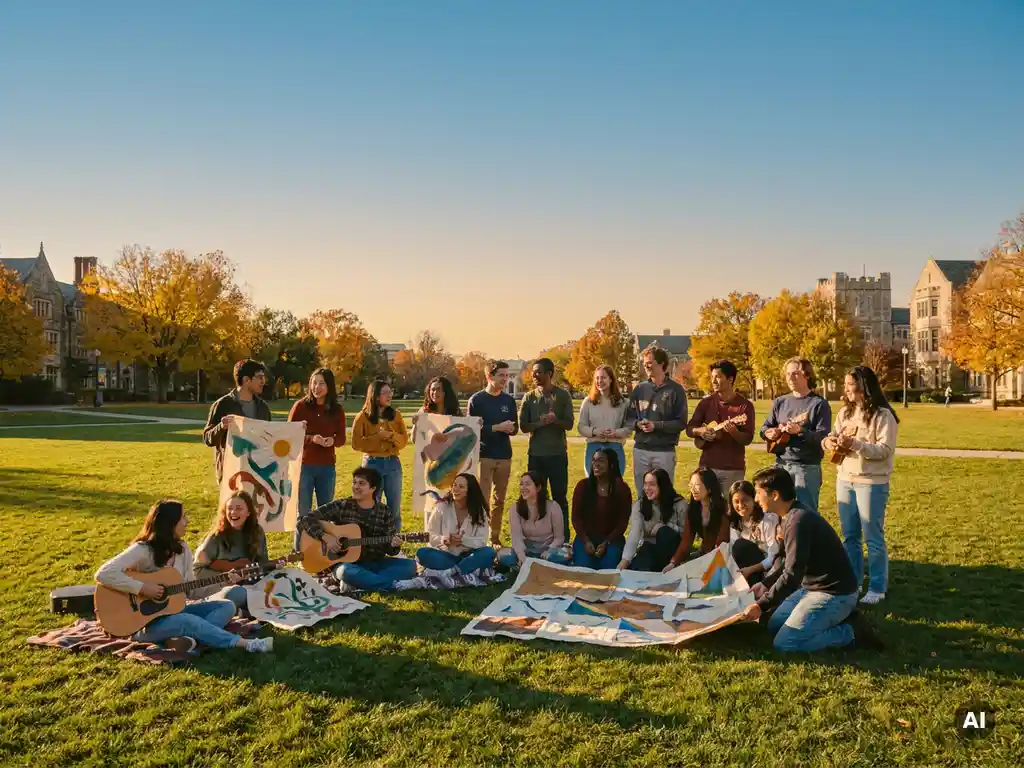
The most popular student clubs at small liberal arts colleges tend to fall into a few consistent categories: academic and debate organizations, cultural and international groups, sustainability and social justice clubs, creative arts ensembles, and student media outlets. These clubs reflect the interdisciplinary, globally minded character of liberal arts education itself. The sections below explore how these organizations work, what makes them distinctive, and how students can get the most from campus life at a small college.
What types of student clubs are most common at small liberal arts colleges?
The most common student clubs at small liberal arts colleges span academic enrichment, cultural exchange, creative expression, civic engagement, and wellness. Because liberal arts programmes encourage students to think across disciplines, campus organizations tend to mirror that breadth, offering spaces where intellectual curiosity and personal passion can meet outside the classroom.
You will typically find the following categories well represented on liberal arts campuses:
- Academic and debate clubs, Model United Nations, philosophy circles, ethics forums, and discipline-specific reading groups are staples at colleges that prize critical thinking.
- Cultural and international organizations, groups celebrating specific national or regional identities, as well as broader intercultural exchange societies, reflect the diverse student bodies that liberal arts colleges attract.
- Sustainability and advocacy groups, environmental action committees, social justice coalitions, and community outreach organizations are particularly prominent at colleges that emphasize civic responsibility.
- Creative arts and performance, student theatre companies, choirs, literary magazines, film clubs, and visual arts collectives give students an outlet for creative exploration beyond coursework.
- Student media, campus newspapers, podcasts, and online publications are common, especially at colleges with strong Media, Culture, and Communication programmes.
- Wellness and sports, yoga groups, hiking clubs, intramural sports teams, and mental health advocacy organizations round out the extracurricular landscape.
The specific mix varies by institution, but the thread connecting them is a shared culture of student initiative and intellectual engagement that defines campus life at liberal arts colleges.
How do student clubs at small colleges differ from those at large universities?
At small liberal arts colleges, student clubs tend to be more accessible, more student-led, and more deeply integrated into campus culture than their counterparts at large universities. With a smaller student body, there are fewer barriers between having an idea and making it happen, and individual members carry genuine influence within their organizations.
At a large research university, a student club might have hundreds of members, a formal hierarchy, and a competitive application process just to join. At a small college with a few hundred students, the same type of organization might have a dozen active members who all know each other well, meet in a common room, and collaborate directly with faculty advisors. That intimacy changes the experience fundamentally.
Other key differences include:
- Greater leadership opportunity: With fewer students competing for positions, motivated individuals often take on meaningful roles earlier in their college careers.
- Cross-pollination between clubs: At small colleges, students frequently belong to multiple organizations, and clubs often collaborate on events, blending academic and social purposes.
- Closer faculty involvement: Faculty at small colleges are more likely to attend club events, serve as advisors, or participate in student-organized panels and discussions.
- Community reach: Small college clubs frequently extend their activities into the surrounding town or region, building partnerships with local organizations, governments, and businesses.
Which student clubs tend to have the highest participation rates?
At small liberal arts colleges, clubs with the highest participation rates are typically those tied to shared identity, social connection, or causes students feel personally invested in. Cultural organizations, sustainability groups, and student government bodies consistently draw strong engagement because they combine community belonging with a sense of purpose.
Student government is often the single most broadly participated-in structure on small campuses because it represents all students and controls funding for other clubs, giving members a direct stake in campus life. Beyond that, cultural and international student organizations tend to attract high participation because they offer a sense of home and community for students far from their countries of origin.
Sustainability and social impact clubs have seen growing engagement in recent years as students increasingly want their extracurricular time to connect to real-world outcomes. At colleges where community-engaged learning is part of the academic model, this type of club often overlaps with coursework, making participation feel both meaningful and academically reinforcing.
Creative clubs, particularly theatre, music, and student publications, also maintain strong and loyal membership because they offer a visible, tangible output that motivates consistent involvement throughout the academic year.
Can students start their own clubs at liberal arts colleges?
Yes, students at liberal arts colleges can almost always start their own clubs, and most institutions actively encourage it. The process is typically straightforward: students submit a proposal to student government or a student affairs office, outline the club’s purpose, and secure a minimum number of founding members. Once approved, new clubs often receive access to campus funding, meeting spaces, and promotional support.
The culture of student initiative is especially strong at liberal arts colleges because the broader academic model already asks students to take ownership of their own learning. Starting a club is a natural extension of that same mindset. Students who feel a gap in the existing extracurricular offering, whether that is a niche academic interest, a cultural tradition not yet represented on campus, or a new form of creative expression, are generally empowered to fill it.
In practice, the most successful student-founded clubs tend to share a few qualities:
- A clear purpose that resonates with a real segment of the student body
- A committed founding group willing to sustain momentum beyond the first semester
- A connection to campus life that makes it easy for new students to discover and join
- A relationship with at least one faculty or staff member who can offer guidance and institutional support
How do clubs at liberal arts colleges support academic and career development?
Student clubs at liberal arts colleges support academic and career development by giving students a structured space to apply classroom knowledge, build transferable skills, and develop a professional identity outside of formal coursework. Participation in clubs builds competencies that employers and graduate programmes value, including leadership, communication, project management, and cross-cultural collaboration.
Debate and Model United Nations clubs sharpen analytical thinking and public speaking. Student publications develop writing, editing, and media literacy. Sustainability and advocacy organizations teach students how to mobilize communities, manage campaigns, and engage with policy processes. Entrepreneurship clubs often connect students with mentors and real funding opportunities.
At colleges that integrate extracurricular involvement into their educational philosophy, the line between club participation and academic growth is deliberately blurred. Students who run an environmental action group may find that their organizing experience directly informs a research project on civic participation. Students who lead a cultural organization may draw on that experience in a course on identity, media, or governance.
This integration is particularly evident at institutions where personal and professional development is built into the curriculum itself, reinforcing that growth happens both inside and outside lecture halls.
What role do international student organizations play on small liberal arts campuses?
International student organizations play a central role on small liberal arts campuses by building cultural bridges, supporting students who are far from home, and enriching the broader community’s understanding of global perspectives. On campuses where dozens of nationalities are represented, these organizations often become the social and emotional backbone of campus life for international students.
Their functions go well beyond cultural celebration events, though those matter too. International student organizations frequently serve as informal support networks where students share practical advice about visas, housing, and adjusting to a new country. They create spaces where students can speak their own languages, share food from home, and maintain a connection to their cultural identity while building a new one on campus.
For the wider campus community, these organizations are a resource for genuine intercultural learning. Events organized by international student groups, whether film screenings, panel discussions, food festivals, or language exchange programmes, give all students direct exposure to perspectives and experiences beyond their own background.
At small colleges with a strong international character, these organizations often collaborate with academic departments, student government, and local community partners, amplifying their reach and embedding global perspectives into the fabric of campus life rather than keeping them confined to a single club meeting.
How UCR supports student life beyond the classroom
University College Roosevelt in Middelburg, the Netherlands, offers a campus environment where the extracurricular and the academic naturally reinforce each other. With around 550 students from over 70 nationalities living and learning together on a residential campus, the conditions for a rich club culture are built into the structure of the college itself.
Key features that support student clubs and extracurricular engagement at UCR include:
- Guaranteed housing for all students, which creates a close-knit residential community where clubs and social connections form organically
- A student-led campus culture, where students take the initiative in organizing activities, events, and organizations across cultural, academic, and social themes
- A mandatory Personal and Professional Development track, which reinforces the skills students build through club participation, including communication, teamwork, and leadership
- Community-Engaged Learning, which connects students with local partners in Middelburg and Zeeland, giving clubs a real-world dimension that extends beyond the campus gates
- An interdisciplinary academic programme across six clusters, which means students from very different academic backgrounds regularly collaborate, making cross-disciplinary clubs a natural fit
If you are looking for a college where extracurricular activities are woven into the fabric of your education rather than treated as an afterthought, explore the student life at UCR and discover what it means to grow academically, personally, and as a citizen of the world.
Related Articles
- What are the most popular cities for students in the Netherlands?
- What leadership opportunities exist within student associations?
- What are the unwritten social rules of a tight-knit university community?
- How do you balance academics and extracurricular activities at college?
- How do you get involved in extracurricular activities at university?