


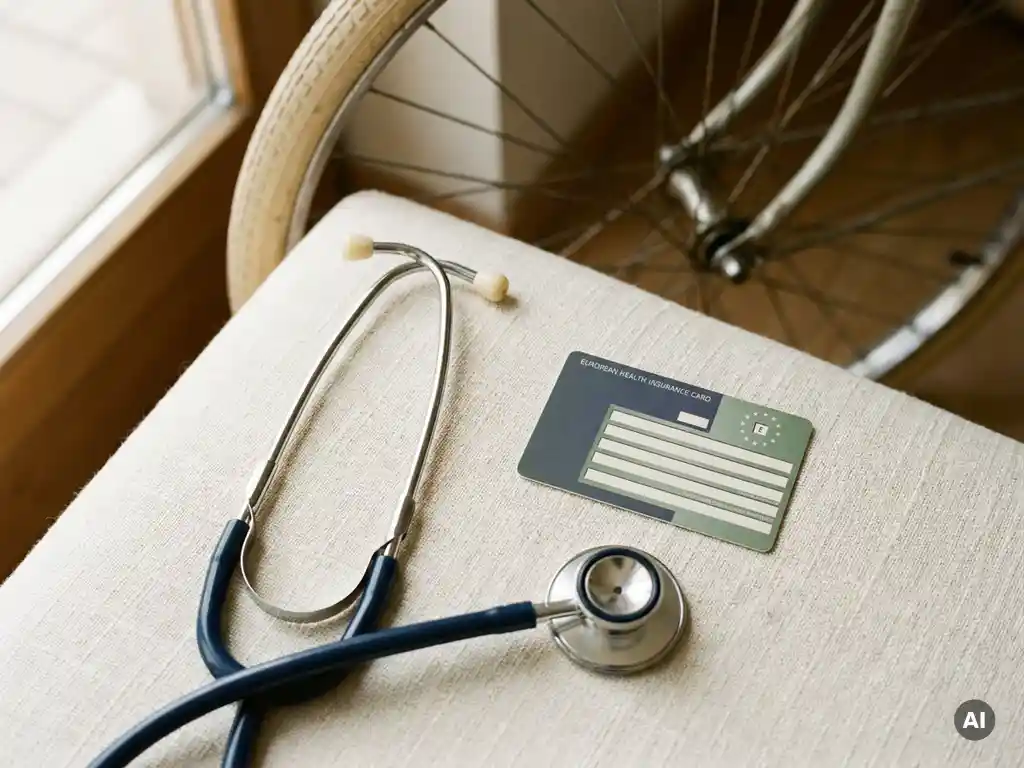
The Dutch healthcare system for international students is accessible but requires active setup on your part. As an international student in the Netherlands, you are generally required to take out Dutch health insurance if you work or have certain visa conditions, and even if you are exempt, arranging adequate medical coverage is essential. This guide walks through the key questions every international student should understand before and after arriving in the Netherlands.
Do international students in the Netherlands need health insurance?
Whether you need Dutch health insurance as an international student depends on your situation. If you work in the Netherlands alongside your studies, even part-time, you are legally required to take out Dutch basic health insurance (basisverzekering). If you are a non-working EU student, you may be able to use your European Health Insurance Card (EHIC) instead. Non-EU students who do not work are not automatically required to take out Dutch insurance but must still have adequate coverage.
In practice, most international students are strongly advised to arrange some form of Dutch or internationally recognized health insurance before they arrive. The EHIC only covers emergency and necessary medical care, not the full range of services you might need during a multi-year degree. Students from outside the EU who hold a residence permit will typically need to demonstrate they have health coverage as part of their stay.
If you are uncertain about your specific situation, the Dutch government’s official information portal and your university’s international office are your best starting points. At UCR, the student support team can help you navigate these requirements as part of your arrival preparation.
How does the Dutch basic health insurance (basisverzekering) work?
The Dutch basic health insurance, known as the basisverzekering, is a mandatory insurance package that covers a defined set of essential medical services. Every person legally required to have Dutch insurance must purchase it from a private health insurer. All insurers are required by law to offer the same basic package, so the core coverage does not differ between providers, though premiums and supplementary packages do vary.
The basic package covers general practitioner (GP) visits, hospital care, prescription medication, mental health care, and emergency services. You pay a monthly premium directly to your insurer, which in 2026 typically ranges between roughly 130 and 160 euros per month depending on the provider and any voluntary excess you choose.
The deductible (eigen risico)
One important feature of the basisverzekering is the annual deductible, called the eigen risico. This is a fixed amount you pay out of pocket each year before your insurer covers most costs. In 2026, the mandatory deductible is 385 euros per year. GP visits are exempt from this deductible, meaning you pay nothing extra when you visit your family doctor. Hospital visits, specialist referrals, and prescription medications do count toward it.
Healthcare allowance (zorgtoeslag)
If your income is below a certain threshold, you may be eligible for a government healthcare allowance called zorgtoeslag, which reduces the effective monthly cost of your premium. Many students who work part-time qualify for this benefit, and it is worth applying for through the Dutch tax authority (Belastingdienst) as soon as you are registered in the Netherlands.
What healthcare costs should international students budget for?
International students in the Netherlands should budget for a monthly insurance premium, an annual deductible, and potential out-of-pocket costs for services not covered by the basic package. A realistic monthly healthcare budget for a student on Dutch insurance is between 130 and 160 euros in premiums, plus the possibility of paying up to 385 euros in deductible costs across the year if you need hospital or specialist care.
GP consultations are free at the point of use once you are registered, which significantly reduces day-to-day costs. However, dental care for adults over 18 is not included in the basic package and must be paid out of pocket or covered through a supplementary insurance plan. A routine dental check-up can cost between 30 and 60 euros, and more complex treatments are considerably more expensive.
Supplementary insurance (aanvullende verzekering) is optional but worth considering if you wear glasses or contact lenses, need physiotherapy, or want dental coverage. These add-ons are purchased separately from your basic insurer and vary widely in cost and scope. Students on a tight budget should compare plans carefully and consider whether they realistically need the extras before committing.
How do you register with a GP (huisarts) in the Netherlands?
To access routine healthcare in the Netherlands, you must register with a local GP, known as a huisarts. GPs are the gatekeepers of the Dutch healthcare system: you almost always need a referral from your GP before seeing a specialist or receiving hospital care. Registering with a GP is one of the first practical steps you should take after arriving in the Netherlands.
The registration process is straightforward. You contact a GP practice near your home address, ask whether they are accepting new patients, and fill in a registration form. You will typically need your BSN (Burgerservicenummer, the Dutch citizen service number), your health insurance details, and proof of address. In smaller cities like Middelburg, where UCR is located, the local GP network is well established and accustomed to registering international students.
Your BSN is central to accessing healthcare in the Netherlands. You receive it when you register with the municipality (gemeente) after arriving. Without a BSN, your insurer cannot properly process your coverage, and GP practices may not be able to register you fully. Registering with the gemeente should therefore be one of your very first steps upon arrival, ideally within five days.
Once registered with a GP, you can book appointments by phone or, increasingly, through an online patient portal. Most GP practices also offer a telephone consultation option for minor questions, which reduces the need for in-person visits for straightforward concerns.
Is mental health care covered for students in the Netherlands?
Yes, mental health care is covered under the Dutch basic health insurance, but with some important conditions. Short-term generalized mental health support (up to around five sessions) is typically available through your GP or a basic mental health provider and is covered by the basic package after your deductible is met. More intensive or specialized mental health treatment is covered under specialized mental health care (gespecialiseerde GGZ), which requires a referral from your GP.
For students, the path to mental health support usually begins with your GP. If you are experiencing anxiety, depression, burnout, or other psychological difficulties, your huisarts can refer you to a psychologist or mental health professional covered by your insurance. Waiting times for specialized care can be significant in the Netherlands, so early contact with your GP is advisable if you feel you need support.
Beyond the formal healthcare system, many universities and colleges offer their own student wellbeing and counseling services. UCR, as a small residential college, places real emphasis on student wellbeing within its close-knit campus community. Students have access to pastoral support and can connect with staff who live and work on or near campus, making it easier to raise concerns early. These institutional support channels complement, rather than replace, formal healthcare.
What should international students do before arriving in the Netherlands?
Before arriving in the Netherlands, international students should take several practical healthcare steps to avoid gaps in coverage or delays in accessing care. Acting early makes the transition significantly smoother and ensures you are protected from your very first day.
- Confirm your insurance obligation: Determine whether you are required to take out Dutch basisverzekering based on your nationality, visa status, and whether you plan to work. Contact your university’s international office if you are unsure.
- Research Dutch health insurers: Compare providers such as CZ, Zilveren Kruis, VGZ, and Menzis. Look at premium costs, supplementary packages, and English-language customer support options.
- Arrange your EHIC if you are an EU citizen: Even if you plan to take out Dutch insurance, having a valid EHIC as a backup is sensible during the transition period.
- Gather your medical records: Bring documentation of any ongoing conditions, current prescriptions, vaccination history, and the names of any medications you take. Dutch brand names may differ from those in your home country.
- Plan to register with the gemeente immediately: Obtaining your BSN quickly unlocks access to insurance, healthcare registration, and banking. Know where your local municipality office is before you arrive.
- Research GP practices near your accommodation: In Middelburg, GP practices are used to working with international students. Identifying one in advance means you can register quickly after arrival.
Students who arrive prepared typically find the Dutch healthcare system straightforward and high quality once they are set up within it. The initial administrative steps are the most demanding part, and completing them promptly removes a significant source of stress during an already busy transition period.
How UCR supports international students with life in the Netherlands
Navigating a new country’s healthcare system is just one part of settling into student life abroad. UCR actively supports incoming international students through this transition in several practical ways:
- Guaranteed housing on campus in Middelburg means you have a fixed address from day one, which is essential for registering with the gemeente and your GP.
- A dedicated international student support team that can guide you through administrative steps including BSN registration and local healthcare access.
- Dutch language courses offered within the curriculum to help international students communicate more confidently in everyday situations, including healthcare settings.
- A close-knit campus community of around 500 students and 50 staff, many of whom live nearby, creating an environment where you can ask questions and find support quickly.
- Incoming exchange students are also fully integrated into campus life and receive the same orientation support as degree students during their semester at UCR.
If you have questions about what life as an international student in the Netherlands looks like before you apply, the UCR admissions team is ready to help. Explore admissions requirements and take the first step toward your studies in Zeeland.
Frequently Asked Questions
Can I switch Dutch health insurers after I've already signed up?
Yes, you can switch Dutch health insurers once per year during the open enrollment period, which runs from November 12 to December 31, with the new coverage starting on January 1. If you find your current insurer’s premiums or service don’t suit your needs, this annual window is your opportunity to compare providers and make a change. In the meantime, it’s worth checking whether your insurer offers any loyalty discounts or adjustments to your supplementary package to better fit your situation.
What happens if I need urgent medical care before I've registered with a GP or sorted my insurance?
If you need urgent medical care before your insurance and GP registration are in place, you can visit a huisartsenpost (out-of-hours GP post) or, in a genuine emergency, go directly to the emergency department (spoedeisende hulp) of a hospital. EU students with a valid EHIC are covered for necessary and emergency care in the interim. Non-EU students should arrange travel or international health insurance to bridge any gap between arrival and the activation of their Dutch basisverzekering, as uninsured emergency care can be very costly.
Do I need to speak Dutch to navigate the healthcare system as an international student?
Not necessarily — many Dutch GPs, specialists, and healthcare staff speak excellent English, particularly in university cities and towns accustomed to international students. That said, some administrative forms, online patient portals, and pharmacy labels may be in Dutch, so having basic Dutch vocabulary for healthcare contexts is genuinely helpful. UCR’s Dutch language courses can give you a practical foundation, and tools like Google Translate can bridge the gap for written materials in the short term.
Is dental care ever covered under Dutch health insurance for students?
Basic dental care for adults over 18 is not covered by the standard basisverzekering — you’ll need to pay out of pocket or purchase supplementary dental insurance (tandartsverzekering) through your insurer. However, certain dental treatments that are medically necessary, such as those related to a jaw condition or accident, may be covered under specific circumstances. If dental care is a regular need for you, comparing supplementary packages from providers like CZ or Zilveren Kruis before you arrive is a smart move, as signing up from the start is simpler than adding coverage later.
What is the biggest mistake international students make when setting up healthcare in the Netherlands?
The most common mistake is delaying municipality (gemeente) registration after arrival, which postpones receiving your BSN and creates a knock-on delay for insurance activation, GP registration, and even opening a Dutch bank account. Many students underestimate how central the BSN is to every administrative process in the Netherlands. Aim to register with your gemeente within the first five days of arrival — in Middelburg, UCR’s support team can help you identify exactly where to go and what documents to bring.
How do I apply for the healthcare allowance (zorgtoeslag) and how much can I expect to receive?
You apply for zorgtoeslag through the Dutch tax authority’s website (belastingdienst.nl), and you’ll need your DigiD — the Dutch digital identity login — to do so. Eligibility is based on your annual income and whether it falls below the government threshold, which changes yearly; many part-time working students qualify. In 2026, the allowance can reduce your effective monthly premium by a meaningful amount, so it’s worth applying as soon as you have your BSN and DigiD set up, and applying retroactively for the months you were eligible is also possible.
What should I do if I have a pre-existing medical condition before moving to the Netherlands?
If you have a pre-existing condition, the good news is that Dutch insurers are legally prohibited from refusing you basic health insurance or charging you a higher premium based on your medical history — the basisverzekering is available to everyone on equal terms. You should, however, bring thorough documentation: prescription details, diagnosis records, and your treatment history, since Dutch medication brand names often differ from those in your home country. Contacting your GP in the Netherlands early and sharing your records will help ensure continuity of care without unnecessary interruption to your treatment.
Related Articles
- What is it like to live in Amsterdam as a student?
- Why is cycling culture in the Netherlands so important to understand before you arrive?
- Why do international students choose to learn Dutch even when classes are in English?
- How do international students make friends in a small Dutch university town?
- How do you register with a GP as an international student in the Netherlands?