


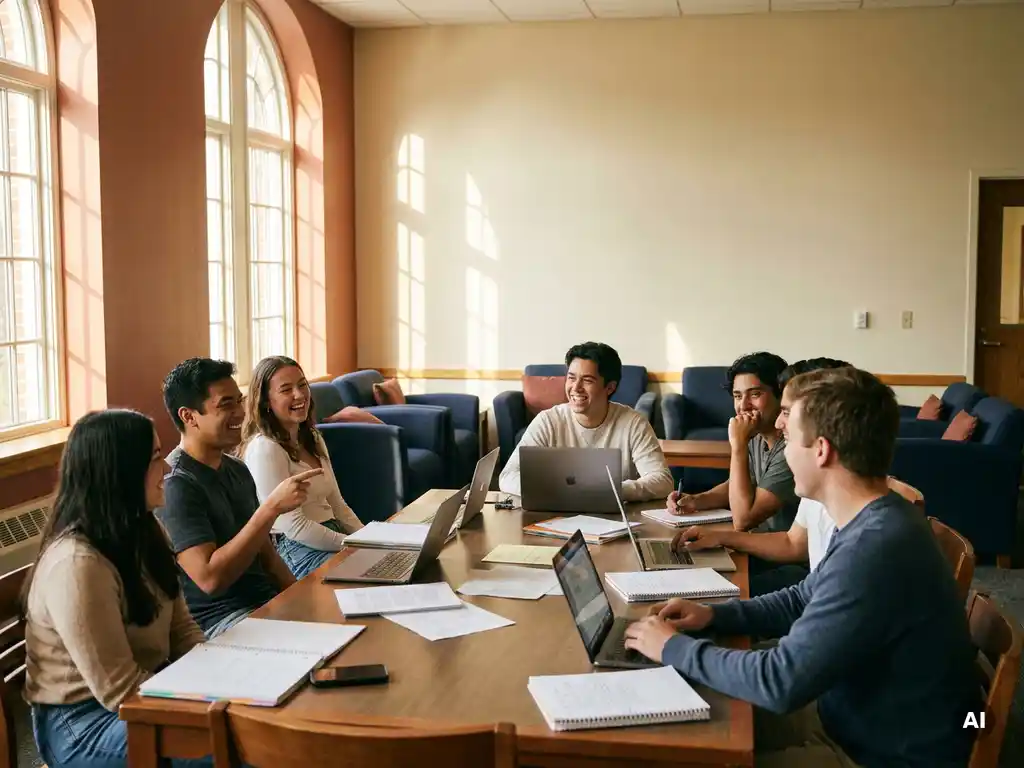
Student clubs genuinely help develop professional skills before graduation. Involvement in extracurricular activities builds transferable competencies like leadership, communication, project management, and teamwork in ways that complement classroom learning. The effect is strongest when students take on active roles and reflect deliberately on what those roles demand of them. Below, this article unpacks the most common questions students and parents have about clubs and career readiness.
What professional skills do student clubs actually build?
Student clubs build a broad range of professional skills, including leadership, communication, event planning, budgeting, conflict resolution, and collaborative decision-making. Because clubs are student-run, members must take genuine ownership of outcomes rather than completing tasks assigned by a teacher or employer. That accountability is what makes the skill development real and lasting.
The specific skills a student develops depend on the role they hold and the type of club they join. A treasurer managing a club’s annual budget practices financial planning and accountability. A president coordinating a team of volunteers develops delegation and motivational communication. A committee member contributing to a large event learns logistics, time management, and how to work under pressure alongside people with different working styles.
What makes clubs particularly valuable is that the stakes are real. A poorly planned event disappoints real attendees. A missed funding deadline has real consequences. That reality pushes students to apply skills with care, not just demonstrate them theoretically. Over time, the cumulative experience of navigating those situations builds professional confidence that is difficult to replicate inside a lecture hall.
How do extracurricular activities compare to internships for skill-building?
Extracurricular activities and internships build overlapping but distinct skill sets. Internships tend to offer deeper exposure to a specific industry, professional hierarchy, and workplace culture. Student clubs, by contrast, develop broader leadership and organisational competencies earlier, often from the first year of university, and without the prerequisite of prior experience.
Internships are typically available to students who already have some academic foundation, which means they often happen in the second or third year of study. Student clubs, on the other hand, are accessible from day one. A first-year student can join a debate society, take on a coordination role within months, and begin accumulating demonstrable leadership experience well before any internship is on the horizon.
The two are most powerful in combination. Clubs build the interpersonal and organisational foundations that make internship performance stronger. Employers frequently note that candidates who have held leadership positions in student organisations arrive at internships better prepared to manage ambiguity, communicate proactively, and work across teams. Rather than viewing clubs and internships as alternatives, students should treat them as sequential or parallel investments in their professional development.
Which types of student clubs offer the most career-relevant experience?
The most career-relevant student clubs are those that require students to lead people, manage resources, produce tangible outputs, or engage with the wider community. This includes student government bodies, entrepreneurship societies, debate clubs, media and journalism organisations, community service groups, and discipline-specific academic societies. The common thread is structured responsibility.
Clubs that develop leadership and strategy
Student government, Model UN, and entrepreneurship clubs place members in positions where they must set goals, build consensus, and deliver results. These environments closely mirror the dynamics of professional project teams. Members learn to navigate disagreement, represent competing interests, and make decisions with incomplete information, skills that are consistently cited by employers as difficult to teach on the job.
Clubs that develop communication and creative output
Campus media organisations, debate societies, and cultural clubs require members to produce work for a real audience. Writing for a student publication, presenting a position in a competitive debate, or organising a cultural festival all demand clarity of thought, persuasion, and the ability to receive and act on feedback. These experiences build the communication confidence that many graduates lack when entering professional environments.
It is worth noting that the type of club matters less than the level of engagement. A student who takes on a meaningful coordinating role in a small niche club will often develop more transferable skills than one who holds a nominal membership in a prestigious society. Depth of involvement is the determining factor.
How can students turn club involvement into CV and interview material?
Students can turn club involvement into compelling CV and interview material by framing their contributions in terms of specific responsibilities, actions taken, and outcomes achieved rather than simply listing the club’s name. The key is translating informal experience into professional language that recruiters and admissions panels recognise.
On a CV, club experience belongs in a dedicated extracurricular or leadership section. Each entry should include the role title, the organisation, the duration, and two to three bullet points describing concrete contributions. Instead of writing “member of the sustainability club,” a student might write “coordinated a campus-wide recycling initiative involving 12 volunteers and three university departments.” The specificity signals genuine involvement.
In interviews, club experience is most powerful when used to answer behavioural questions. Questions like “Tell me about a time you managed a conflict within a team” or “Describe a project you led from start to finish” are answered far more convincingly when the student can draw on a real situation from their extracurricular life. The key is to use a clear structure: describe the situation, the action taken, and the result. Practising this framing before interviews transforms club involvement from a casual talking point into a persuasive demonstration of professional readiness.
Students who keep a brief running record of their club responsibilities and notable moments throughout the year will find this process much easier. A short note after each significant event or decision is enough to build a bank of interview-ready examples by graduation.
What does research say about clubs and graduate employability?
Research consistently shows that employers value extracurricular involvement as a signal of initiative, teamwork, and leadership potential. Graduate recruitment studies across multiple countries have found that hiring managers frequently rank demonstrated leadership outside the classroom among the top indicators of a candidate’s likely performance in collaborative, fast-moving work environments.
The underlying reason is straightforward. Academic grades confirm that a student can absorb and apply knowledge within a structured assessment system. Extracurricular leadership confirms that a student can take initiative, manage others, and produce results in an unstructured environment. Employers, particularly those hiring into graduate programmes, are looking for evidence of both.
Industry experience also points to a related finding: students who combine academic rigour with active extracurricular engagement tend to transition more smoothly into graduate roles. They arrive with a clearer sense of their own working style, stronger communication habits, and a more realistic understanding of what collaborative professional work actually involves. For students pursuing selective master’s programmes, admissions committees similarly view meaningful extracurricular leadership as evidence of character and capacity beyond academic metrics.
The caveat worth noting is that involvement alone does not guarantee these outcomes. Students who participate passively, without reflecting on what their club experience teaches them, gain less than those who actively seek feedback, take on stretch responsibilities, and connect their extracurricular learning to their broader development goals.
How UCR helps students build professional skills through and beyond the classroom
University College Roosevelt integrates professional skill development directly into the academic experience, which means students do not have to choose between academic rigour and personal growth. Key features that support this include:
- A mandatory Personal and Professional Development track that runs throughout the degree, building communication, teamwork, adaptability, and career preparation skills alongside academic coursework
- A living lab approach that connects students with local government, industry, and community partners, giving extracurricular and project-based work real-world stakes from the first semester
- A small, residential campus community of around 500 students, where student-led clubs and initiatives carry genuine responsibility and visibility within the broader campus life
- An interdisciplinary curriculum across six clusters that encourages students to collaborate across academic backgrounds, mirroring the cross-functional teamwork that professional environments demand
- Undergraduate research involvement from year one, building analytical and project management skills that translate directly into graduate and professional contexts
If you are looking for a university environment where professional development is built into the fabric of your degree, not bolted on as an afterthought, UCR offers exactly that. Discover the UCR experience and start shaping your future today.
Related Articles
- How does a student association umbrella organization work at a university?
- Why do students choose a residential liberal arts college over a large university?
- What is the difference between a Dutch residence permit and a student visa?
- What are the biggest cultural differences international students notice in the Netherlands?
- How do you find part-time work as an international student in the Netherlands?