


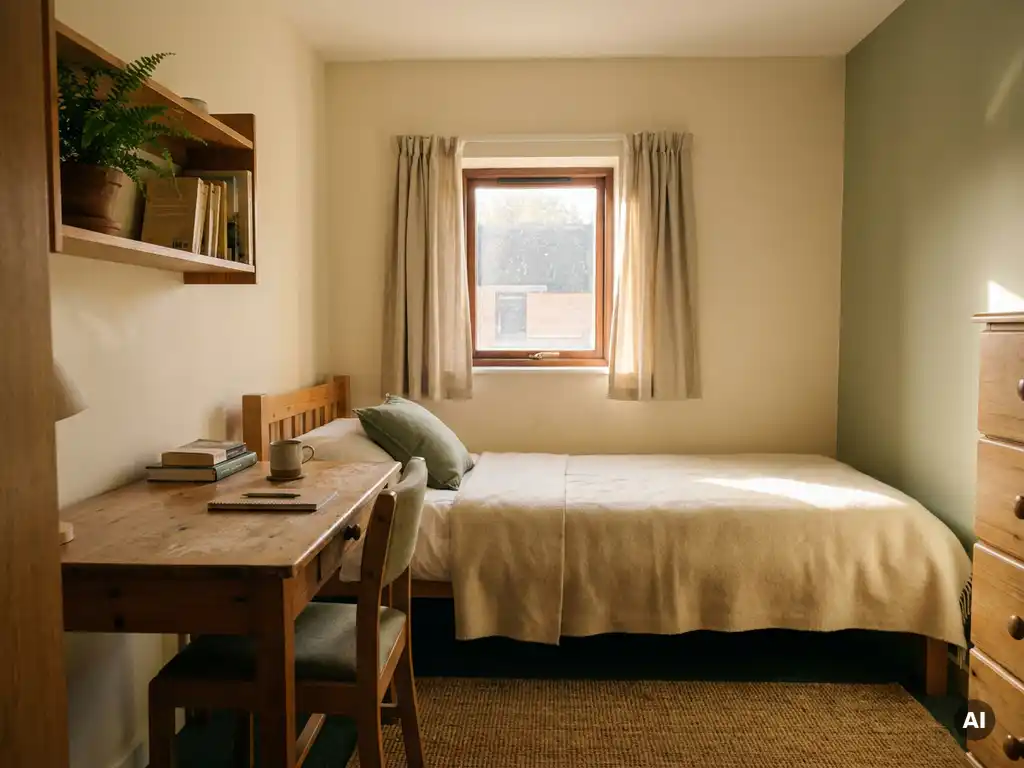
Student housing in the Netherlands typically costs between €400 and €900 per month, depending on the city, housing type, and whether the accommodation is university-managed or privately rented. Costs vary significantly across regions, with major cities like Amsterdam and Utrecht sitting at the higher end, while smaller cities and towns offer considerably more affordable options. This article breaks down what students can expect to pay, what extra costs to factor in, and how to find financial support.
What types of student housing are available in the Netherlands?
In the Netherlands, student housing generally falls into three main categories: university-managed or institution-affiliated accommodation, private rental housing, and shared houses or apartments. Each type differs in cost, availability, and the experience it offers, so understanding the options is a practical first step for any incoming student.
University-managed or institution-affiliated housing is accommodation provided or coordinated directly by a college or university. This is the most straightforward option for international students because it removes the need to navigate the Dutch private rental market from abroad. Some institutions, including residential colleges, guarantee housing for all enrolled students for the full duration of their studies, which provides significant peace of mind.
Private rental housing includes independent apartments, studio flats, and rooms rented through landlords or housing agencies. This option offers more independence but requires students to search, apply, and sign contracts themselves, often in a competitive market. In popular student cities, private rooms can be difficult to secure before arrival.
Shared houses, known locally as kamers, are a deeply embedded part of Dutch student culture. Students rent a single room in a house and share common areas such as kitchens and bathrooms with housemates. This is often the most social and cost-effective private option, though quality and price vary widely.
How much does student housing typically cost per month in the Netherlands?
Monthly student housing costs in the Netherlands range from roughly €400 to €900, with the average depending heavily on location and housing type. A shared room in a student house in a smaller city might cost €400 to €550, while a private studio in Amsterdam or Utrecht can easily exceed €800 to €900 per month, sometimes more.
Here is a general breakdown of what students can expect:
- Shared room in a student house: €400 to €600 per month in most cities
- University-managed single room: €350 to €650 per month, depending on the institution and facilities
- Private studio apartment: €700 to €1,000+ per month in major cities
- Smaller cities and towns: Generally 20 to 40 percent cheaper than Amsterdam or Utrecht
Location is the single biggest driver of cost. Cities like Amsterdam, Utrecht, and Leiden are among the most expensive places to rent in the Netherlands, while towns in provinces such as Zeeland, Groningen, or Limburg offer substantially lower rents. Students who choose institutions based outside the major metropolitan areas often find their housing costs are considerably more manageable.
Is university-managed housing cheaper than private rentals in the Netherlands?
University-managed housing is often cheaper than comparable private rentals, particularly in cities where the private rental market is highly competitive. Beyond price, institution-affiliated accommodation typically includes utilities, internet, and furnishings in the monthly fee, making the total cost more predictable and easier to budget.
The main advantage of university housing is not just cost but certainty. In a tight rental market, international students who rely on private rentals often face delays, scams, or the risk of arriving without a confirmed address. University-managed accommodation eliminates this risk entirely.
That said, university housing is not always available at every institution. Many Dutch universities operate through housing corporations or have limited campus accommodation, meaning students must still compete for places. Residential colleges that guarantee housing for all students are the exception rather than the rule in the Netherlands, making them particularly attractive to international students who want to plan their move with confidence.
What extra costs should students budget for beyond rent?
Beyond monthly rent, students in the Netherlands should budget for a range of additional expenses that can add €200 to €500 per month to overall living costs, depending on lifestyle and housing arrangement.
Common extra costs include:
- Utilities: Gas, electricity, and water can add €50 to €150 per month if not included in rent. Many private rentals do not include these.
- Internet: Around €25 to €40 per month if not bundled with the housing arrangement.
- Health insurance: Students staying in the Netherlands for more than four months are typically required to register and may need Dutch health insurance, which costs approximately €130 to €160 per month. EU students with a valid European Health Insurance Card have some coverage, but non-EU students should budget for this separately.
- Groceries and food: A realistic monthly grocery budget is €150 to €250.
- Transportation: The Netherlands has excellent public transport, and students under 30 can apply for a student OV-chipkaart, which offers free travel on either weekdays or weekends.
- One-time costs: These include a rental deposit (usually one to two months’ rent), registration fees, and any required furnishings or household items.
Students in university-managed or residential campus housing often find that several of these costs are either included or significantly reduced, which makes the overall monthly outlay more predictable than private renting.
Can international students get financial help with housing costs in the Netherlands?
Yes, international students in the Netherlands may be eligible for several forms of financial support that can help offset housing costs, though eligibility depends on factors such as nationality, employment status, and the type of institution attended.
Dutch housing allowance (huurtoeslag) is a government subsidy available to eligible renters whose income falls below a certain threshold. EU students who work part-time in the Netherlands may qualify, but non-EU students generally do not unless they meet specific residency conditions. It is worth checking eligibility directly with the Dutch Tax and Customs Administration (Belastingdienst).
Scholarships and grants are another important source of support. Many Dutch universities and university colleges offer merit-based or need-based scholarships for international students. These awards may not be labeled specifically as housing support, but by reducing overall study costs, they free up funds for accommodation. Students should research available financial support options at their institution well before applying.
Part-time work is permitted for non-EU students on a student visa, subject to a limit of 16 hours per week during term time and full-time during official holidays. Many students supplement their budget this way, though this should be planned carefully to avoid affecting academic performance.
How does student housing in the Netherlands compare to other European countries?
The Netherlands sits in the mid-to-upper range for student housing costs in Europe. It is more affordable than major cities in the United Kingdom and Switzerland, broadly comparable to Germany and Belgium, and more expensive than Eastern European student cities such as Prague, Warsaw, or Budapest.
Within Western Europe, the comparison looks roughly like this:
- United Kingdom: London student accommodation often exceeds €1,000 to €1,500 per month, making the Netherlands considerably more affordable by comparison.
- Germany: Costs are similar, with shared rooms in cities like Berlin or Munich ranging from €400 to €800 depending on the area.
- Belgium: Comparable to the Netherlands, with Ghent and Leuven offering affordable student housing relative to Brussels.
- France: Paris is among the most expensive in Europe, though smaller French cities offer more reasonable rates.
- Eastern Europe: Significantly cheaper, with shared rooms often available for €200 to €400 per month.
What makes the Netherlands stand out for international students is not just price but quality of life and infrastructure. The country has a well-developed public transport network, a high standard of student housing, and a strong tradition of international academic communities. Smaller Dutch cities in particular offer a genuine balance of affordability and quality, with lower rents than the major metropolitan areas and a more intimate student experience.
How UCR approaches student housing
For international students weighing up their options, University College Roosevelt (UCR) removes one of the biggest uncertainties of studying abroad: finding a place to live. Here is what UCR offers:
- Guaranteed housing for all students for the full duration of their studies, from day one to graduation
- Affordable on-campus accommodation in the historic city centre of Middelburg, a smaller Dutch city where living costs are lower than in Amsterdam or Utrecht
- A residential campus community of around 500 students from more than 70 countries, where housing and learning are integrated into a single, close-knit experience
- Financial support options to help make studying at UCR accessible for international students
If you want to study in the Netherlands without the stress of navigating a competitive rental market from abroad, UCR’s residential model is worth exploring. Find out more about financial support at UCR or get in touch with the admissions team to ask about housing and costs.
Frequently Asked Questions
When should I start looking for student housing in the Netherlands?
You should start searching for student housing as early as possible — ideally six to twelve months before your intended start date, particularly if you plan to rent privately in competitive cities like Amsterdam, Utrecht, or Leiden. Demand consistently outpaces supply in major Dutch student cities, and waiting until a few months before arrival significantly reduces your options. If you are enrolling at an institution that guarantees housing, confirm your place on the housing list as soon as you receive your offer of admission.
What is the difference between a room with and without utilities included, and how do I know which I am renting?
A room advertised as ‘all-in’ (alles inclusief) includes utilities such as gas, electricity, water, and sometimes internet within the monthly rent, making budgeting straightforward. A room listed without utilities means you will pay these separately, which can add €75 to €190 per month depending on usage and the season. Always check the rental contract carefully and ask the landlord explicitly what is and is not included before signing — this is one of the most common sources of unexpected costs for international students.
Do I need to register at a Dutch municipality when I move into student housing, and why does it matter?
Yes, if you are staying in the Netherlands for more than four months, you are legally required to register at your local municipality (gemeente) at your home address. This registration, known as the BRP (Basisregistratie Personen), is essential because it determines your eligibility for services such as Dutch health insurance, banking, and — for eligible EU students — the housing allowance (huurtoeslag). Some private landlords rent rooms without allowing tenant registration, which can cause serious practical problems, so always confirm registration rights before signing a lease.
What are the most common scams targeting international students looking for housing in the Netherlands, and how can I avoid them?
The most prevalent scam involves fraudulent listings on platforms like Facebook Marketplace or Pararius, where a ‘landlord’ asks for a deposit or first month’s rent to be transferred before you have viewed the property or signed a contract — then disappears with the money. To protect yourself, never transfer money without a signed rental agreement, always verify the landlord’s identity and ownership of the property, and avoid any listing that pressures you to decide quickly or pay via unusual methods like gift cards or cryptocurrency. Using university housing services or reputable, established platforms significantly reduces this risk.
Can I apply for the Dutch housing allowance (huurtoeslag) as an international student?
Eligibility for the Dutch housing allowance is limited and depends on your nationality, income, and the type of rental contract you hold. EU students who are officially registered in the Netherlands and earn income from part-time work may qualify, provided their rent and income fall within the government thresholds. Non-EU students on a student visa generally do not qualify unless they meet specific residency conditions. The best way to check your personal eligibility is to use the official tool on the Dutch Tax and Customs Administration website (belastingdienst.nl) or ask your institution’s student services team for guidance.
What should I look for when comparing student housing options to make sure I am getting good value?
Beyond the headline rent figure, compare what is included (utilities, internet, furnishings), the length and flexibility of the contract, whether you can register at the address, the distance to your campus, and the condition of shared facilities if applicable. A slightly higher all-in rent at a well-managed property is often better value than a lower advertised rent that excludes utilities, requires a large deposit, or comes with a rigid long-term contract. Reading reviews from current or former tenants and, where possible, visiting the property virtually or in person before committing can save significant stress and money.
Is it realistic to find student housing in the Netherlands after arriving, or do I need to secure accommodation before I travel?
In most major Dutch student cities, arriving without confirmed accommodation is a high-risk strategy. The private rental market moves quickly, viewings are competitive, and short-term alternatives such as hostels or temporary sublets can be expensive and disruptive to your studies. If you are renting privately, aim to have a signed contract before you travel. If that is not possible, some universities offer temporary housing for newly arrived students while they search — check with your institution’s housing or student services office well in advance to understand what support is available.
Related Articles
- What are the most popular cities for students in the Netherlands?
- What documents do you need to enroll in a Dutch university?
- How do you balance academics and extracurricular activities at college?
- What extracurricular activities look best on a graduate school application?
- How do you deal with rainy Dutch weather as someone from a warmer country?