


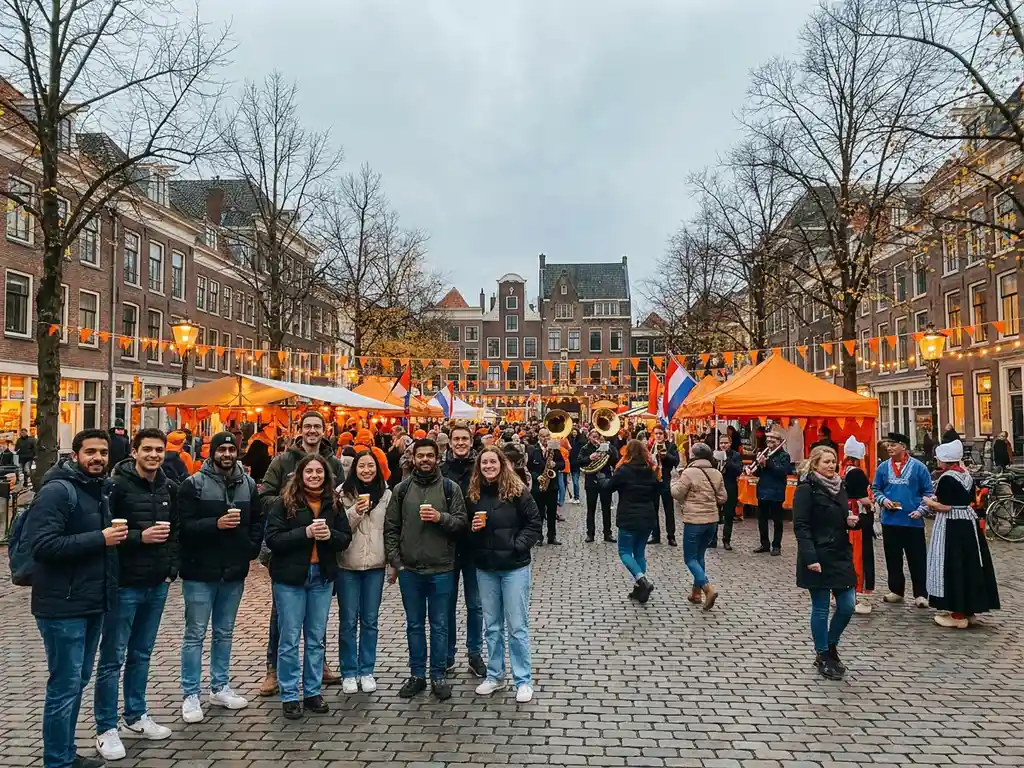
International students living in the Netherlands will encounter a rich calendar of Dutch holidays and cultural traditions throughout the academic year. Key celebrations include King’s Day, Sinterklaas, Christmas, and, in some regions, Carnival, each carrying distinct customs that shape daily life, campus rhythms, and social interactions. Understanding these traditions helps international students feel at home, connect with Dutch peers, and make the most of living in the Netherlands.
Which Dutch holidays will international students actually experience on campus?
Living in the Netherlands as a student means your academic year is punctuated by several public holidays and cultural moments that directly affect campus life. The most prominent are King’s Day (April 27), Sinterklaas (early to mid-December), Christmas (December 25 and 26), New Year’s Eve, and Easter. Liberation Day on May 5 is also widely observed, and in some southern regions, Carnival takes over for several days in late winter.
Most Dutch public holidays result in university closures and a noticeably quieter or festively charged atmosphere in town. For international students in Middelburg, the city’s historic center comes alive during these occasions, and the local community often celebrates in ways that spill naturally onto the streets and into campus life. Knowing which holidays are coming and what to expect makes it far easier to plan your schedule and join in.
- King’s Day (April 27): National celebration with street parties and outdoor markets
- Sinterklaas (December 5): A distinctly Dutch gift-giving tradition separate from Christmas
- Christmas (December 25 and 26): Two-day public holiday; the Netherlands observes both First and Second Christmas Day
- Liberation Day (May 5): Commemorates the end of World War II occupation; free festivals across the country
- Easter (date varies): Two-day holiday, Good Friday through Easter Monday
- New Year’s Eve and New Year’s Day: Celebrated enthusiastically with fireworks throughout the country
What happens during King’s Day and why is it such a big deal?
King’s Day, celebrated on April 27, is the most exuberant national holiday in the Netherlands. The entire country dresses in orange, the color of the Dutch Royal House of Orange-Nassau, and cities and towns transform into open-air street parties. Markets, live music, boat parades, and spontaneous dancing make it one of the most visually spectacular days in the Dutch calendar.
For international students, King’s Day is often a formative cultural experience. In Middelburg, the historic market square and surrounding streets fill with vendors, music stages, and residents of all ages celebrating together. The tradition of the vrijmarkt (free market) means anyone can set up a stall and sell second-hand goods, making it a lively and informal community event rather than a commercial one.
The holiday has deep roots. It was originally called Queen’s Day and celebrated on the birthday of Queen Juliana (April 30), but when King Willem-Alexander ascended to the throne in 2013, the date shifted to his birthday, April 27. The orange dress code is non-negotiable in spirit, and international students who join in wearing orange are immediately welcomed into the festivities. It is a genuinely inclusive celebration, and the sense of national pride is warm rather than exclusive.
How is Sinterklaas different from Christmas in the Netherlands?
Sinterklaas and Christmas are two entirely separate celebrations in the Netherlands, and understanding the distinction is essential for international students. Sinterklaas, celebrated on the evening of December 5 (Sinterklaasavond), is the traditional Dutch gift-giving holiday, while Christmas on December 25 and 26 is observed more as a family and religious occasion, typically without the large-scale present exchange that characterizes Christmas in many other countries.
Sinterklaas is a beloved figure based on Saint Nicholas, depicted as a bishop who arrives by steamboat from Spain in mid-November each year. His arrival is broadcast live on Dutch television and welcomed with parades in cities across the country. In the weeks that follow, children leave their shoes by the fireplace or front door overnight, hoping to find small gifts or sweets the next morning. The celebration culminates on December 5, when families exchange gifts accompanied by poems and playful surprises.
For international students, Sinterklaas can feel unfamiliar at first, but Dutch peers are usually enthusiastic about sharing the tradition. Many student communities organize their own Sinterklaas events, and the Surprise tradition, where participants make a creative handmade gift for a secret recipient along with a humorous poem, is a particularly fun way to get involved. Christmas in the Netherlands, by contrast, tends to be quieter and more focused on shared meals and family gatherings, though the festive atmosphere in Dutch towns during December is genuinely charming.
What is Carnival and do students in Zeeland celebrate it?
Carnival in the Netherlands is a multi-day festival of costumes, music, and street celebrations held in the days leading up to Ash Wednesday, typically in late February or early March. It is most intensely celebrated in the southern provinces of Noord-Brabant and Limburg, where entire cities shut down for three days of parades and parties. Zeeland, where Middelburg is located, sits in a transitional zone, and Carnival is observed with noticeably less intensity than in the deep south.
That said, international students in Middelburg are not far from the heart of Dutch Carnival country. Cities like Bergen op Zoom, just over an hour away, are famous for their Carnival celebrations and attract visitors from across the Netherlands and Belgium. Students who want to experience the full spectacle of Dutch Carnival can easily make the trip during the holiday period.
On campus, Carnival may pass with relatively little fanfare compared to King’s Day or Sinterklaas, but student associations sometimes organize themed events. The broader point for international students is that Dutch regional identity is strong, and what is a defining cultural event in one part of the Netherlands may feel almost absent in another. Zeeland has its own distinct cultural character, shaped by its coastal geography, maritime history, and close ties with the province of Noord-Brabant.
Are there Dutch cultural customs that affect everyday student life?
Beyond public holidays, several Dutch cultural customs shape the texture of everyday student life in the Netherlands. The Dutch are known for their directness, their cycling culture, their appreciation for structure and punctuality, and their strong emphasis on equality and informality in social settings. These values show up in daily interactions and are worth understanding early.
Directness and social norms
Dutch communication is famously straightforward. Professors, administrators, and peers tend to say what they mean without excessive hedging, which can feel blunt to students from cultures where indirectness is the norm. This directness is not considered rude; it is a cultural value rooted in openness and equality. International students who understand this adapt quickly and often come to appreciate the clarity it brings to academic and social exchanges.
Cycling and outdoor culture
The Netherlands has one of the highest cycling rates in the world, and in Middelburg, a bicycle is the natural way to get around. Most students own or rent a bike within their first weeks on campus. Zeeland also has extensive cycling paths through its flat, scenic landscape, and exploring the coastline and countryside by bike is a popular weekend activity. Dutch holidays and weekends often involve outdoor gatherings, borrels (informal drinks), and visits to local markets, all of which are easy to join once you know to look for them.
Gezelligheid
Perhaps the most important Dutch cultural concept for international students to know is gezelligheid, a word that roughly translates to coziness, conviviality, or a warm sense of togetherness. It describes the feeling of a good conversation over coffee, a lively student gathering, or a cozy evening in. Dutch social life revolves around creating and enjoying gezelligheid, and recognizing this value helps international students understand why Dutch peers invest so much in shared spaces, communal meals, and informal get-togethers.
How can international students join in Dutch holiday celebrations?
International students can participate in Dutch holidays and traditions by staying curious, accepting invitations, and taking small steps to engage with local customs rather than waiting for celebrations to come to them. The most effective approach is to connect with Dutch peers and community members early in the academic year, before the major holidays arrive.
Here are practical ways to get involved:
- Ask Dutch peers about their traditions: Most Dutch students are happy to explain Sinterklaas, King’s Day customs, or regional practices, and may invite international students to join family or friend celebrations
- Attend campus-organized events: Student associations frequently organize holiday-themed activities, from Sinterklaas Surprise exchanges to King’s Day markets on or near campus
- Explore Middelburg during holidays: The city’s historic center hosts public events for most major celebrations, and simply walking through town during King’s Day or the Sinterklaas arrival is an experience in itself
- Take Dutch language courses: Basic Dutch goes a long way in connecting with local traditions and community members, and many international programs offer introductory Dutch language instruction
- Plan trips to regional celebrations: For Carnival, Liberation Day festivals, or larger King’s Day events, nearby cities offer experiences that complement what is available in Middelburg
- Embrace the calendar: Mark Dutch public holidays in advance so you can plan around university closures and avoid being caught off guard when shops, services, or transport schedules change
Living in the Netherlands as an international student is as much about cultural immersion as academic achievement. The more openly you engage with Dutch holidays and traditions, the richer your experience of living in the Netherlands becomes.
How UCR helps international students settle into Dutch culture
University College Roosevelt is designed to support international students in building a genuine connection with Dutch life, not just Dutch academia. Several features of the UCR experience directly help students navigate cultural traditions and feel at home in the Netherlands:
- Dutch language courses are available to international students, providing a practical foundation for engaging with local customs, neighbors, and community events
- Guaranteed on-campus housing in Middelburg’s historic center places students in the heart of the city, where Dutch holidays and street celebrations happen right outside the door
- Community Engaged Learning connects students with local organizations, municipalities, and community partners, building relationships that extend well beyond the campus gates
- A close-knit international community of around 500 students and 50 staff from over 70 nationalities means cultural exchange flows in every direction, including from Dutch peers sharing their own traditions
- Personal and Professional Development courses include intercultural communication and adaptability, skills that directly support navigating a new cultural environment
Whether you are curious about studying at UCR or ready to take the next step, the team is here to answer your questions. Connect with UCR to find out how life in Middelburg can become the foundation for both your academic journey and your understanding of Dutch culture.
Related Articles
- How does community-engaged learning work at university?
- How do you find student accommodation in the Netherlands?
- What is the difference between a university and a hogeschool in the Netherlands?
- Can being part of a student club help you find your career direction?
- What is the difference between EU and non-EU student requirements in the Netherlands?