


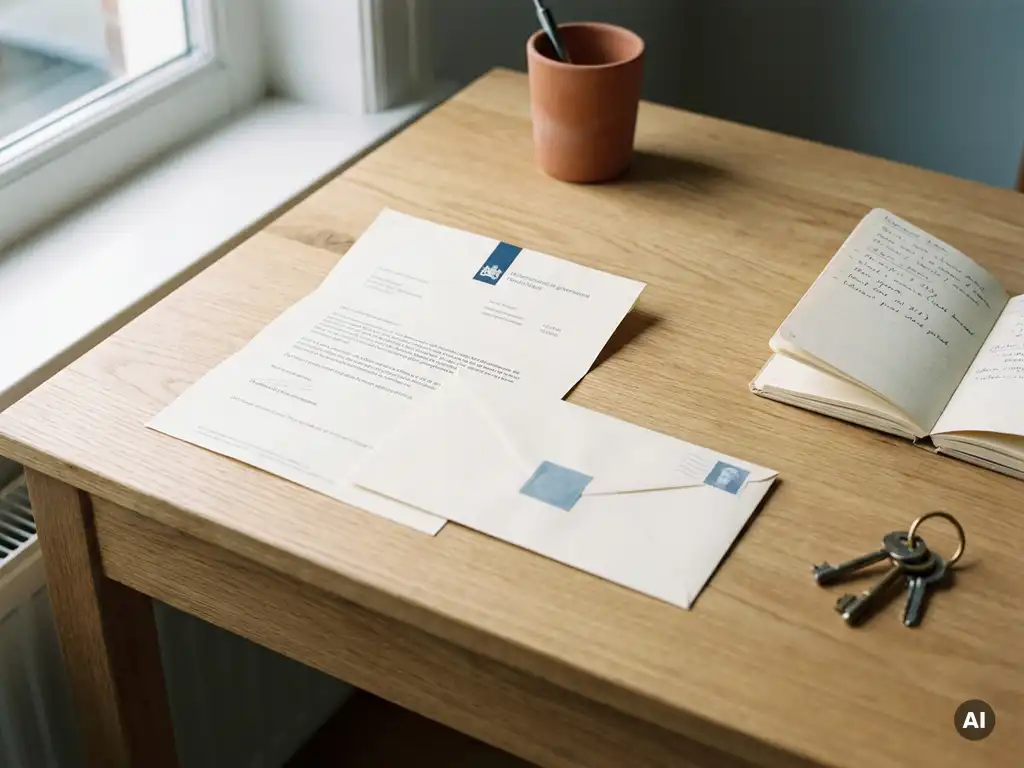
A BSN number, or burgerservicenummer, is the Dutch citizen service number, a unique personal identification number that the Dutch government assigns to every person registered in the Netherlands. Think of it as the Dutch equivalent of a social security number or national identification number. If you are an international student planning to study in the Netherlands, you will need a BSN to open a bank account, access healthcare, sign a rental contract, and handle almost every administrative task during your stay. This article walks through the most common questions international students have about the BSN number process.
Who needs a BSN number in the Netherlands?
Anyone who lives, works, or studies in the Netherlands for longer than four months is required to register with the Dutch municipality and receive a BSN number. For international students, this means that if you are enrolled in a degree programme or an exchange stay of more than four months, obtaining a BSN is not optional, it is a legal requirement and a practical necessity from day one.
Students staying for a shorter period, such as a single semester of roughly three to four months, may fall close to the threshold. In practice, most universities and colleges in the Netherlands encourage all incoming students to register regardless of their exact stay length, because without a BSN you cannot arrange basic services. If you are joining a degree programme or an exchange programme at a Dutch institution, assume that you need one.
Dutch nationals already have a BSN from birth, assigned through the Municipal Personal Records Database. The registration process described in this article applies specifically to international students and other newcomers arriving from outside the Netherlands.
How do international students get a BSN number?
International students get a BSN number by registering at the local municipality, known in Dutch as the gemeente. Once you register and your details are entered into the Dutch population register, a BSN is automatically assigned to you. In most cases, your university or college will guide you through this process during an arrival or orientation week.
The registration process typically works in one of two ways, depending on your situation:
- Registration at the municipality (BRP registration): Students staying longer than four months register in the Basisregistratie Personen (BRP), the Dutch personal records database. You visit the local gemeentehuis (town hall), present your documents, and your BSN is issued either immediately or sent to you shortly after.
- Registration at a non-resident counter (RNI): Students staying between one and four months who do not qualify for full BRP registration can register at a dedicated RNI desk located at selected municipalities across the country. This also results in a BSN being assigned.
Many Dutch universities, including those in smaller cities, organise group registration sessions during the first week of the academic year. These sessions are specifically designed to help international students complete the process efficiently, often with staff on hand to assist with paperwork and translation.
What documents do you need to register for a BSN?
To register for a BSN number at a Dutch municipality, you will generally need to bring a valid passport or national identity card, proof of your address in the Netherlands, and proof of your enrolment at a Dutch educational institution. The exact document requirements can vary slightly between municipalities, so it is always worth checking with your institution or the local gemeente in advance.
The documents most commonly required include:
- Valid passport or EU/EEA identity card: This is the primary identification document. A driving licence is not accepted as proof of identity for BSN registration.
- Proof of address: This can be a rental contract, a letter from your housing provider, or a declaration from your university confirming your on-campus address.
- Proof of enrolment: A letter of acceptance or enrolment confirmation from your university or college is typically required to confirm your reason for being in the Netherlands.
- Residence permit (if applicable): Non-EU/EEA students who require a visa or residence permit should bring this document as well. In many cases, the institution will have already arranged the permit on your behalf before arrival.
If you are registering as part of a group session organised by your institution, the administrative team will usually confirm exactly which documents to bring beforehand. Arriving with originals rather than copies is strongly advised, as photocopies are generally not accepted.
How long does it take to receive a BSN number?
In many cases, you receive your BSN number on the same day you register at the municipality. When you complete your in-person registration at the town hall and all your documents are in order, the BSN is often printed on a confirmation letter that you take home with you. In other municipalities, it may be sent by post within a few days.
If your institution organises a group registration event, the process is usually streamlined so that students receive their BSN the same day. This is one of the main advantages of attending an organised session rather than visiting the gemeente independently, particularly if you are unfamiliar with Dutch administrative procedures or the local language.
Once you have your BSN, you can begin using it immediately. There is no activation period, the number is valid from the moment it is assigned, and you can provide it to your bank, health insurer, or any other service provider right away.
What can’t you do in the Netherlands without a BSN number?
Without a BSN number, you cannot access most essential services in the Netherlands. The citizen service number is required for almost every formal interaction with Dutch institutions, both public and private. For international students, the absence of a BSN creates immediate and practical barriers from the moment they arrive.
Specifically, you cannot do the following without a BSN:
- Open a Dutch bank account: All major Dutch banks require a BSN as part of their identification process. Without a bank account, receiving grants, paying rent, or managing day-to-day expenses becomes significantly more difficult.
- Register with a general practitioner (huisarts): Access to Dutch healthcare, including visits to a GP, requires registration, which in turn requires a BSN.
- Apply for health insurance: Health insurance is mandatory in the Netherlands for anyone staying longer than four months. Registering for a policy requires your BSN.
- Apply for a study grant or allowance: If you are eligible for Dutch student finance through DUO (Dienst Uitvoering Onderwijs), you cannot apply without a BSN.
- File taxes or receive income: If you work part-time alongside your studies, your employer will need your BSN to register you with the Dutch Tax and Customs Administration (Belastingdienst).
- Arrange utilities or mobile contracts: Many service providers use the BSN as part of identity verification for contracts.
In short, the BSN is the administrative foundation for life in the Netherlands. Arranging it as early as possible after arrival removes significant friction from settling in.
Is a BSN number the same as a DigiD?
No, a BSN number and a DigiD are not the same thing, though they are closely related. Your BSN is your unique citizen service number, a static identification number assigned to you by the Dutch government. A DigiD is a digital identity login that allows you to access Dutch government websites and services online. You need your BSN to apply for a DigiD, but the two serve different functions.
Think of the distinction this way: your BSN is a number that identifies you in the Dutch system, while your DigiD is a username and password combination that lets you log in to government portals using that identity. Once you have your BSN, you can create a DigiD account through the official DigiD website.
As an international student, you are likely to need a DigiD for tasks such as:
- Accessing your Dutch health insurer’s online portal
- Submitting documents to DUO for student finance
- Interacting with the Dutch Tax and Customs Administration online
- Viewing your registration details in the BRP
Setting up your DigiD shortly after receiving your BSN is a practical step that saves time later. The registration process is straightforward and can be completed online, though it requires verification by post or through the DigiD app, which can take a few days.
How UCR helps incoming students with administrative arrival steps
Navigating Dutch bureaucracy in a new country can feel overwhelming, especially in the first weeks of arrival. University College Roosevelt supports its incoming students, both degree students and exchange students, in getting settled from day one. Here is how UCR makes the process more manageable:
- Organised BSN registration sessions: UCR coordinates group registration appointments with the local municipality in Middelburg, so students can complete the process together with support from staff.
- Guaranteed on-campus housing: All students receive a confirmed address before arrival, which is one of the documents required for BSN registration.
- Arrival support and orientation: UCR’s orientation programme covers practical administrative steps, including health insurance, banking, and DigiD setup.
- Dutch language courses: UCR offers Dutch language courses specifically for international students, which helps with navigating everyday life and administrative communication in the Netherlands.
Whether you are joining as a degree student or as part of the incoming exchange programme, UCR’s team is available to answer questions about arrival logistics. Reach out to the admissions team to find out exactly what to expect before and after you arrive in Middelburg.
Frequently Asked Questions
Can I start the BSN registration process before I arrive in the Netherlands?
Unfortunately, you cannot register for a BSN before arriving in the Netherlands, as the process requires an in-person visit to the municipality with your original documents. However, you can prepare well in advance by gathering all required documents, confirming your housing address, and checking with your institution whether they organise a group registration session during orientation week. Arriving fully prepared means you can complete registration as early as your first or second day in the country.
What should I do if I lose my BSN number or cannot find it after registration?
Your BSN appears on several official documents, so check your municipality registration confirmation letter, your Dutch health insurance policy, any correspondence from DUO, or your DigiD account first. If you still cannot locate it, you can visit or contact your local gemeente with your passport to retrieve it. Once you have a DigiD set up, you can also view your BSN by logging into MijnOverheid, the Dutch government’s personal online portal.
I am only doing a semester abroad of around four months — do I still need a BSN?
If your stay is right at the four-month threshold, it is almost always worth registering anyway. Even a stay of exactly four months will require a bank account, healthcare access, and a confirmed address — none of which you can easily arrange without a BSN. Students in this situation can register at an RNI (non-resident) desk rather than through full BRP registration, which still results in a valid BSN being issued. Check with your host institution, as most Dutch universities will advise all incoming students to register regardless of stay length.
Can I open a Dutch bank account or get health insurance while I am waiting for my BSN?
Most major Dutch banks, including ING, ABN AMRO, and Rabobank, require a BSN before they will open an account, so this step typically has to wait until after registration. For health insurance, the same applies — insurers need your BSN to activate a policy. Because of this, it is strongly recommended to prioritise BSN registration in your very first days in the Netherlands, ideally through a group session organised by your institution, to avoid delays in setting up these essential services.
What happens if I do not register for a BSN — are there any penalties?
For students staying longer than four months, failing to register in the BRP is technically a violation of Dutch administrative law and can result in fines. More practically, the consequences are immediate and disruptive: you will be unable to open a bank account, access healthcare, apply for student finance, or sign a legal contract. There is no benefit to delaying registration, and the process itself is straightforward, especially when supported by your institution.
Do I need a new BSN if I return to the Netherlands for a second study period or a follow-on programme?
No — your BSN is a permanent, lifelong number that does not change. If you were previously registered in the Netherlands and received a BSN, that same number remains yours even if you left the country. When you return, you will need to re-register with the municipality to update your address in the BRP, but you will not be issued a new BSN. Keep a record of your original number so you can provide it when re-registering.
How soon after getting my BSN should I set up a DigiD, and how long does it take?
You should set up your DigiD as soon as possible after receiving your BSN, ideally within the first week. The online registration at digid.nl takes only a few minutes, but the verification step — either via a posted activation letter or through the DigiD app with a valid ID document — can take up to five business days. Setting it up early means you will have full access to Dutch government portals, your health insurer’s online services, and DUO’s student finance platform well before you need them.
Related Articles
- Are A-levels accepted by Dutch university colleges?
- How much do non-EU students pay for a bachelor's degree in the Netherlands?
- What are the unwritten social rules of a tight-knit university community?
- Why is campus community important for academic success?
- What documents do non-EU students need before arriving in the Netherlands?