

International students adjusting to life in the Netherlands have access to a wide range of support systems, from academic mentoring and mental health services to housing assistance and student-led integration programmes. These resources are especially robust at residential liberal arts colleges, where the small-scale environment means students are rarely left to navigate challenges alone. The questions below unpack exactly what that support looks like in practice.
What academic support is available to international students in the Netherlands?
International students in the Netherlands can access a broad spectrum of academic support, including personal tutoring, academic skills workshops, writing centres, and mandatory development programmes built directly into the curriculum. At smaller colleges, this support is woven into daily campus life rather than offered as an optional add-on.
At liberal arts and sciences colleges like UCR, academic support goes beyond generic study skills sessions. Every student participates in a mandatory Personal and Professional Development trajectory from their first semester. This programme builds transferable skills including effective communication, teamwork, adaptability, and academic research methods. Because students begin engaging with research projects from day one, they are never left to figure out university-level study habits on their own.
Faculty at small colleges are typically far more accessible than at large research universities. With a student body of around 500 and a staff of 50, the student-to-faculty ratio at UCR means students can approach instructors directly, co-create course content, and receive personalised guidance on their academic path. This level of access is one of the most significant advantages of choosing a small-scale college environment in the Netherlands.
Dutch universities also commonly offer language support. International students at UCR, for example, can take Dutch language courses as part of their programme, helping them settle into Dutch culture and society more comfortably alongside their English-taught academic work.
How do residential college communities help international students settle in?
Residential college communities help international students settle in by creating an immediate social and physical anchor. When students live, study, and socialise in the same close-knit environment, the isolation that often accompanies moving to a new country is significantly reduced from the very first week.
Guaranteed housing is one of the most practical forms of support a college can offer. At UCR, all students are guaranteed affordable housing on campus for the full duration of their studies. This removes one of the most stressful logistical challenges international students face: finding a place to live in a foreign country before they have local knowledge or a local network.
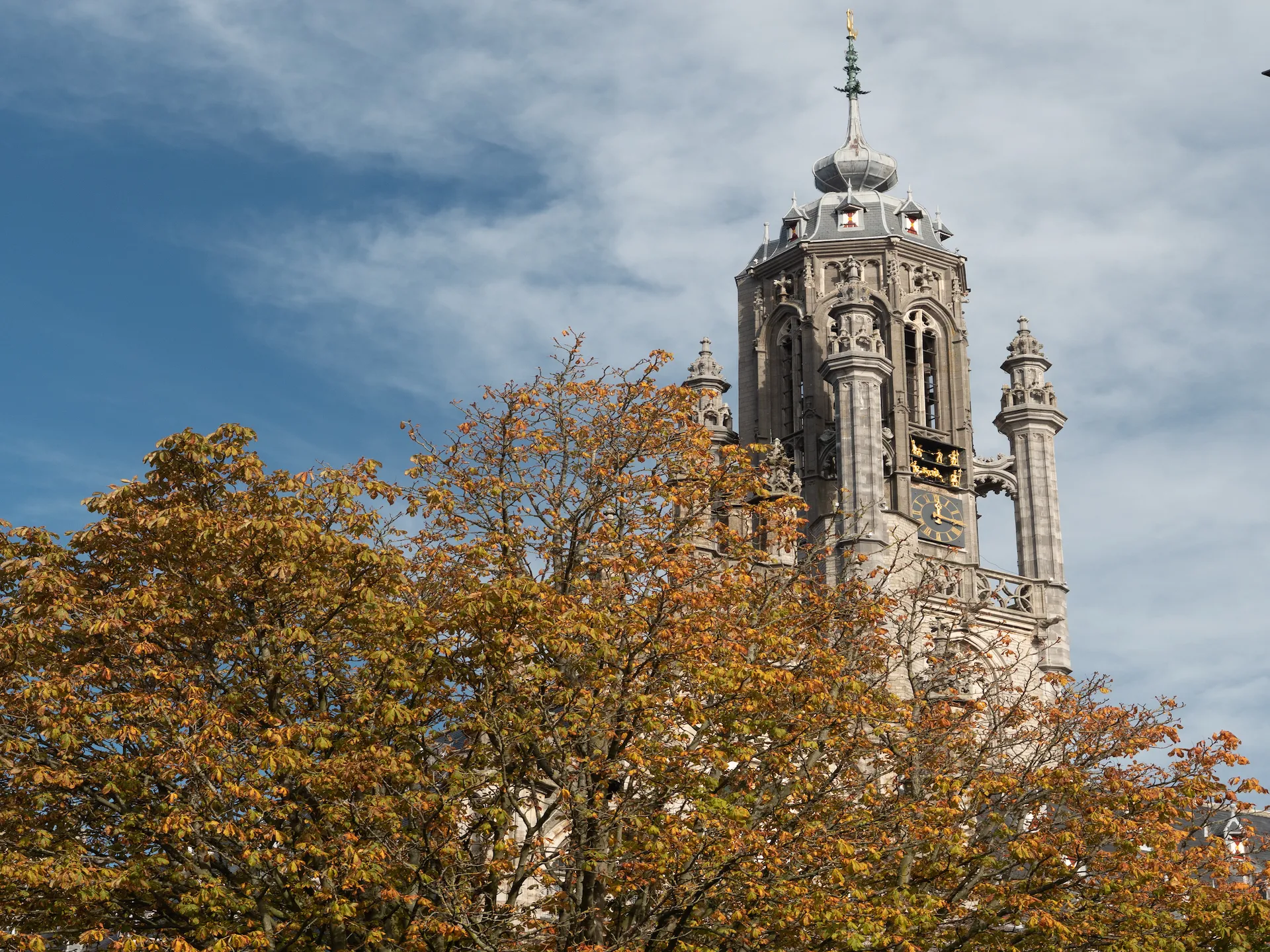
Beyond the practical dimension, residential life creates organic social integration. When students share dining spaces, common rooms, and campus events with peers from over 70 nationalities, cross-cultural friendships form naturally rather than through formal programming alone. The close proximity of faculty and staff, many of whom live in or near Middelburg, reinforces this sense of belonging. Students are not just enrolled in a programme; they are part of a living community that operates around the clock.
The compact scale of a residential campus also means that no student disappears into anonymity. Staff notice when a student seems to be struggling, and peer networks form quickly. For students who have relocated far from home, this kind of visibility and connection can make an enormous difference during the adjustment period.
What mental health and wellbeing resources do Dutch colleges offer?
Dutch colleges and universities generally provide mental health and wellbeing support through a combination of student counsellors, psychologists, peer support networks, and structured development programmes. The specific resources available vary by institution, but the Netherlands has a strong tradition of student welfare provision within higher education.
At the national level, Dutch universities are required to provide student counselling services, and many partner with external mental health providers to extend their capacity. Students experiencing stress, anxiety, homesickness, or more serious mental health challenges can typically access confidential counselling through their institution.
At smaller residential colleges, the wellbeing infrastructure operates differently from a large campus. Because staff know students personally and the community is intimate, early intervention is more natural. A tutor, a fellow student, or an academic adviser is often the first point of contact when someone is struggling, and that person can then connect the student with the appropriate professional resource.
The Personal and Professional Development programme that UCR builds into its curriculum also plays a wellbeing role. By explicitly developing resilience, self-awareness, and adaptability as academic skills, the programme helps students build the emotional toolkit they need to navigate both university life and the broader challenges of living abroad.
How can international students navigate Dutch bureaucracy and practical life?
International students in the Netherlands typically need to register with the local municipality, open a Dutch bank account, obtain a citizen service number (BSN), and arrange health insurance. Most Dutch universities and colleges provide dedicated orientation programmes and administrative support to help international students complete these steps.
The practical steps can feel overwhelming when tackled alone, but institutions generally walk students through the process during the first weeks of arrival. Key tasks include:
- Registering at the local municipality (gemeente) to receive a BSN number, which is required for banking, healthcare, and employment
- Arranging Dutch health insurance, which is compulsory for residents staying longer than four months
- Opening a Dutch bank account, typically with providers such as ING, ABN AMRO, or Bunq, which accept international applicants
- Understanding public transport options, including the OV-chipkaart used on trains, buses, and trams throughout the Netherlands
- Registering for a visa or residence permit if arriving from outside the European Union or EEA
In a town like Middelburg, the compact scale of the city works in students’ favour. The municipality is accessible, queues are shorter than in major Dutch cities, and the UCR campus is located in the historic centre, a ten-minute walk from the railway station. Trains run to and from Middelburg every 30 minutes, connecting students to the broader Dutch rail network for travel across the country.
Dutch language skills, even at a basic level, help significantly with daily life. Fortunately, the Dutch population has among the highest English proficiency rates in the world, so international students can manage most interactions in English while gradually building their Dutch vocabulary.
What role do student organisations play in international student integration?
Student organisations play a central role in international student integration by creating social structures, shared activities, and a sense of belonging that formal academic programmes alone cannot provide. At residential colleges, student-led culture is often the primary driver of community life.
At UCR, the student-led campus culture is a defining feature of the experience. With over 70 nationalities represented in a community of around 500 students, student organisations naturally become spaces where different cultural perspectives meet. Whether through sports teams, cultural clubs, debate societies, or community-engaged learning projects, these groups give students a reason to connect beyond the classroom.
Student organisations also serve a practical integration function. Returning students who have already navigated the challenges of arriving in the Netherlands can share knowledge, advice, and social networks with newcomers. This peer-to-peer support is often more immediately reassuring than formal institutional guidance, because it comes from people who have lived the same experience.
Community Engaged Learning (CEL) at UCR takes student involvement a step further by connecting students with local government, businesses, and organisations in Zeeland. These partnerships give international students direct contact with Dutch society, helping them build local knowledge and relationships that extend well beyond the campus gates.
Are there exchange and cross-cultural programmes that ease the transition?
Yes. Exchange programmes and cross-cultural initiatives ease the transition by giving international students structured opportunities to broaden their perspective, build global networks, and engage with different academic and cultural environments. These programmes also signal that the institution values international experience as part of education itself.
Because UCR is part of Utrecht University, students have access to an extensive range of exchange opportunities through Utrecht’s global network of partner institutions, in addition to UCR’s own dedicated partnerships. These include exchanges with the University of Nebraska at Kearney, Bard College in New York, and Glendon College in Toronto, Canada. Students who want to study subjects not offered at UCR, or who want to experience a different academic culture, can apply to go on exchange for a semester.
Cross-cultural learning at UCR is also embedded in everyday campus life rather than reserved for formal exchange periods. With students from more than 70 countries studying together on a small residential campus, every seminar, group project, and shared meal becomes an opportunity for genuine cross-cultural exchange. The interdisciplinary curriculum reinforces this by encouraging students to approach global issues from multiple disciplinary and cultural vantage points.
The combination of a diverse residential community, a flexible liberal arts curriculum, and access to international exchange programmes means that cross-cultural learning is not a single event in a student’s journey at UCR. It is the texture of daily life.
How UCR helps international students adjust to life in the Netherlands
UCR is designed from the ground up to support international students through every stage of the adjustment process. As a small, residential liberal arts and sciences college in Middelburg, UCR combines institutional structures with genuine community to make the transition to Dutch student life as smooth as possible. Specifically, UCR offers:
- Guaranteed housing for all students for the full duration of their studies, removing one of the biggest practical stressors of studying abroad
- A mandatory Personal and Professional Development programme that builds communication, resilience, and adaptability from the first semester
- Dutch language courses for international students to ease integration into Dutch culture and daily life
- A close-knit campus community of around 500 students from over 70 nationalities, where peer support and cross-cultural connection happen naturally
- Access to exchange programmes through UCR’s own partnerships and Utrecht University’s global network
- Community Engaged Learning that connects students directly with local organisations, government, and businesses in Zeeland
If you want to learn more about what life as an international student at UCR looks like, or if you have questions about admissions, housing, or the academic programme, the UCR team is ready to help. Get in touch with UCR and take the first step toward finding your place in a truly international community.