


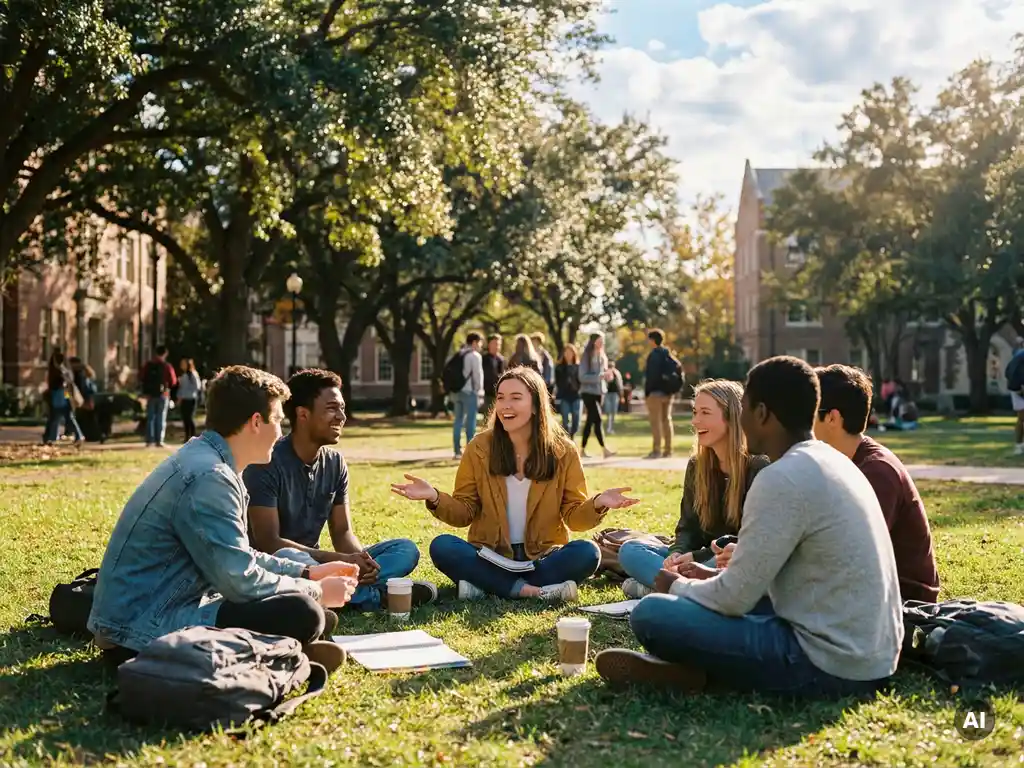
Extracurricular involvement matters during your undergraduate years because it develops skills, relationships, and experiences that academic coursework alone cannot provide. Lectures and seminars build knowledge; activities outside the classroom build the person who applies that knowledge. For students navigating a competitive graduate admissions landscape or an evolving job market, what you do beyond your degree often shapes how far that degree takes you. The questions below unpack exactly why that is and how to make the most of campus life from day one.
What counts as extracurricular involvement at university?
Extracurricular involvement at university refers to any structured activity a student participates in outside their formal academic programme. This includes student associations, sports teams, cultural clubs, volunteering, student government, debate societies, peer mentoring, and community engagement projects. If it happens outside the lecture hall and requires commitment, initiative, or collaboration, it counts.
The definition is broader than many students initially assume. Extracurricular activities undergraduate students engage in can range from organising a campus event to leading a sustainability initiative in the local community. At a residential college, the boundaries between academic and extracurricular life blur naturally because students live, eat, and socialise in the same environment where they study. This proximity creates constant opportunities to get involved in ways that feel organic rather than forced.
It is also worth noting that informal leadership counts. If you coordinate a study group that grows into a peer support network, or if you take initiative on a community project connected to your coursework, those experiences carry real weight. Extracurricular involvement is ultimately about agency: choosing to engage with something beyond what is required of you.
How does extracurricular involvement affect academic performance?
Extracurricular involvement generally supports rather than undermines academic performance when managed well. Students who engage in campus activities tend to develop stronger time management habits, a clearer sense of purpose, and greater motivation to succeed academically. The key is balance: moderate involvement tends to enhance performance, while overcommitment can stretch attention too thin.
The connection between extracurricular engagement and academic outcomes is well established in higher education research. Students who feel connected to their campus community are more likely to persist through academic challenges, seek support when they need it, and stay enrolled through to graduation. A sense of belonging is not a soft benefit; it is a practical academic asset.
There is also a cognitive benefit to variety. Switching between academic work and a club activity, a sport, or a community project gives the brain the kind of active rest that improves focus and retention when you return to your studies. Students who treat extracurricular activities as a complete break from thinking often find they return to their coursework with sharper concentration and renewed energy.
What skills do extracurricular activities build that lectures cannot?
Extracurricular activities build applied, interpersonal, and leadership skills that structured academic teaching rarely replicates. Lectures can teach you how leadership works in theory; running a student organisation teaches you how it feels in practice. The skills developed through campus involvement include communication, conflict resolution, project management, adaptability, and the ability to motivate others towards a shared goal.
These are precisely the transferable skills that employers and graduate admissions committees describe as essential but difficult to assess from transcripts alone. A student who has chaired a committee, organised a cross-campus event, or led a volunteer initiative has demonstrated those skills in a real context rather than described them in an essay.
Skills built through team-based activities
Working in a team outside the classroom is different from a group assignment. There is no grade forcing participation, which means collaboration has to be earned through trust, communication, and mutual accountability. Students who take part in team sports, ensemble performances, or multidisciplinary project groups develop a much more nuanced understanding of how effective teams function and how to navigate disagreement constructively.
Skills built through leadership roles
Taking on a leadership role in a student association or community project forces students to develop skills they may not yet know they have. Delegating tasks, managing expectations, adapting plans when things go wrong, and representing a group’s interests to an external audience are all capabilities that grow through practice. These experiences build the kind of confident, self-aware graduate that both employers and postgraduate programmes actively seek.
How do employers view extracurricular activities on a graduate’s CV?
Employers view extracurricular activities as evidence of initiative, character, and practical capability. When two candidates hold similar degrees and grades, the one with a record of meaningful campus involvement stands out because it signals that they can manage competing demands, work with others, and take responsibility for outcomes beyond what was required of them.
This is especially true for roles that require communication, teamwork, or leadership from day one. Many graduate-level positions offer limited time for on-the-job training, so hiring managers look for candidates who have already demonstrated the ability to function in real-world, high-stakes environments. Extracurricular involvement provides exactly that kind of evidence.
It is important, however, that students can articulate what they actually did and what they learned from it. Listing a club membership without being able to describe your contribution is of limited value. The most compelling CVs connect extracurricular experiences to specific competencies: not just “member of the debate society” but “competed in regional debates, which sharpened my ability to construct arguments under pressure and respond to counterpoints in real time.”
When should students start getting involved on campus?
Students should start exploring extracurricular opportunities from their very first semester. Early involvement helps new students build social connections faster, establish routines that include both academic and personal development, and discover which activities genuinely interest them before their schedule becomes more demanding in later years.
Waiting until the second or third year to get involved is a common mistake. By that point, leadership positions in student organisations are often held by students who joined earlier, and the social networks that form in the first months of university life have already solidified. Starting early does not mean overcommitting; it means attending a few introductory events, trying one or two activities, and seeing what sticks.
At a small residential college, the first weeks of the academic year are particularly rich with opportunities. Because students live on campus and share common spaces, informal involvement often precedes formal sign-ups. Conversations at dinner, spontaneous projects, and shared interests between housemates frequently evolve into structured activities. The sooner students engage with that environment, the more they get from it.
Can extracurricular involvement support personal development alongside academics?
Extracurricular involvement is one of the most effective drivers of personal development during undergraduate years. Activities outside the classroom push students into unfamiliar situations, expose them to different perspectives, and build resilience, self-awareness, and confidence in ways that academic study alone rarely achieves. Personal growth and academic growth are not in competition; they reinforce each other.
This is particularly evident in liberal arts college environments, where the distinction between learning inside and outside the classroom is deliberately blurred. When students engage with their local community, take on roles in student government, or collaborate on interdisciplinary projects, they are not taking time away from their education. They are extending it into contexts that test their values, sharpen their judgement, and deepen their understanding of the world they are preparing to enter.
Personal development also includes knowing yourself better. Many students arrive at university with a clear sense of what they want to study but a much vaguer sense of who they are and what they stand for. Extracurricular involvement accelerates that process of self-discovery. Whether through a creative society, a sports team, a community engagement project, or a student-led debate, students encounter challenges and relationships that reveal strengths and interests they did not know they had.
How UCR supports extracurricular involvement and personal development
At University College Roosevelt, extracurricular involvement is not an afterthought. It is built into the fabric of the college experience. UCR’s small, residential campus of around 500 students creates the conditions where meaningful involvement is accessible from day one, and where the line between academic and personal growth is intentionally thin.
- Personal and Professional Development track: Every UCR student participates in a mandatory trajectory focused on communication, teamwork, adaptability, and career preparation, ensuring that personal development is structured and intentional alongside academic study.
- Community Engaged Learning: UCR’s living lab approach connects students with local government, businesses, and organisations in Zeeland, giving extracurricular involvement real-world stakes and genuine community impact.
- Student-led campus culture: With over 70 nationalities and an active student community, UCR’s campus life is shaped largely by students themselves, creating space for diverse clubs, initiatives, and leadership opportunities.
- Guaranteed residential community: Because all students live on campus, the social and extracurricular life of the college is immediate and accessible, making it far easier to get involved from the moment you arrive.
- Interdisciplinary collaboration: UCR’s flexible curriculum encourages students from different academic backgrounds to work together, which naturally extends into extracurricular projects and shared initiatives.
If you are looking for an undergraduate experience where personal development, community engagement, and academic ambition grow together, UCR offers exactly that environment. Explore your place at UCR and discover what life beyond the classroom can look like when the whole campus is designed for it.
Related Articles
- What mental health support is available for students in the Netherlands?
- What is a BSN number and why do students in the Netherlands need it?
- What is it like to live in Amsterdam as a student?
- What is the difference between a student association and a student club?
- How do international students budget their monthly expenses in the Netherlands?