


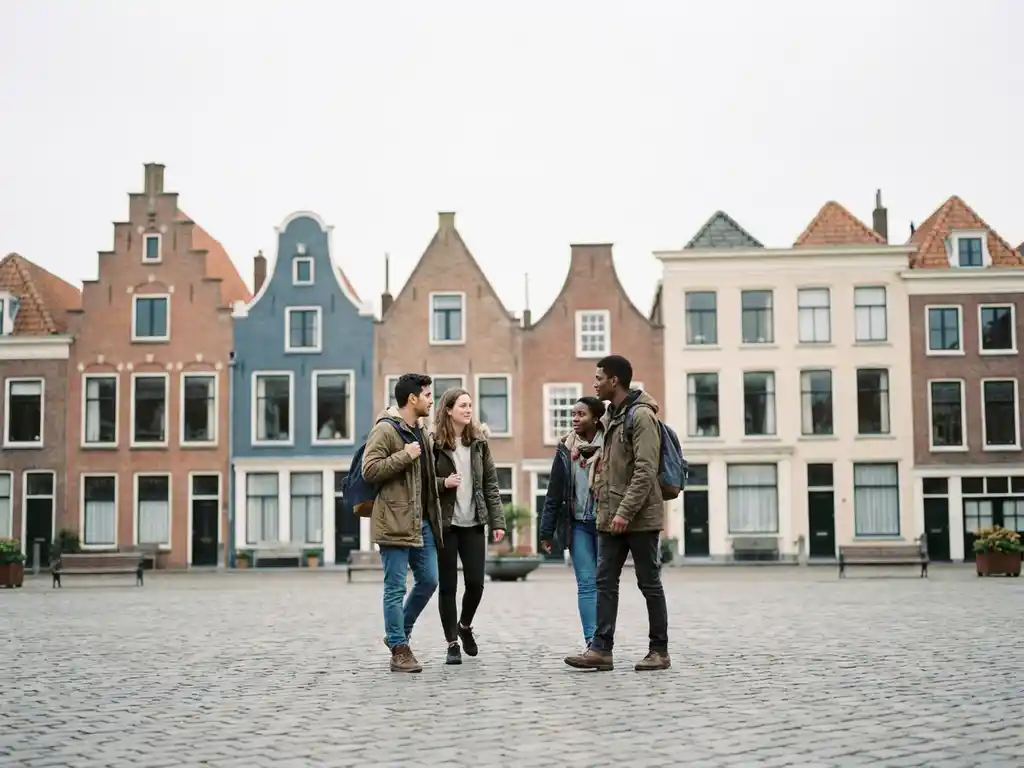
You can open a Dutch bank account without a BSN number, but your options are limited. Most major Dutch banks require a Burger Service Nummer (BSN) as part of their standard account opening process. However, a small number of banks and digital financial services do allow you to open a basic account before you have one, making it possible to manage money during your first weeks in the Netherlands.
This is especially relevant for international students who arrive in the country before completing their municipality registration, which is typically when a BSN is issued. Understanding the workarounds, the right banks to approach, and what to prepare in advance will save you a lot of stress during an already busy transition period.
Can you open a Dutch bank account before getting a BSN?
Yes, it is possible to open a Dutch bank account without a BSN, but only with specific banks and under certain conditions. Most traditional Dutch banks will not process a standard account application without a citizen service number. However, some banks offer a limited or temporary account for newcomers, and certain digital banks operate with fewer initial requirements.
The key distinction is between a full current account and a basic payment account. A full account with all features, such as a debit card, direct debits, and online banking, almost always requires a BSN at some stage. A basic payment account, which EU regulations require banks to offer to legal residents, may be opened with alternative identification while your BSN is being processed.
For international students arriving in the Netherlands, the timeline matters. Registration at your local municipality (gemeente) is usually required before a BSN is assigned, and that process can take several days to a few weeks depending on your situation. During that gap, having at least a temporary account or a digital alternative is important for paying rent, buying groceries, and receiving any initial financial support.
What documents do you need without a BSN number?
Without a BSN, you will need to provide a stronger set of alternative documents to prove your identity and legal residency. The exact requirements vary by bank, but most institutions will ask for a valid passport or national ID card, proof of your address in the Netherlands, and proof of your student status or enrolment.
Here is what to gather before approaching a bank:
- Valid passport — a national ID card may be accepted by some banks, but a passport is the most universally accepted document
- Proof of address — a rental contract, a letter from your university confirming your housing, or a recent utility bill in your name
- Proof of enrolment — an official acceptance letter or enrolment confirmation from your university
- Proof of legal stay — for non-EU students, this means your visa or residence permit; EU students may use their passport alone
- Tax identification number from your home country — some banks request this as a substitute while your BSN is pending
Having certified or apostilled copies of key documents can also help, particularly if a bank representative is unfamiliar with foreign documentation. It is worth calling the bank in advance to confirm exactly what they will accept, as branch-level policies can differ from what is listed on a bank’s website.
Which Dutch banks are easiest for international students?
Among Dutch banks, ING and ABN AMRO are often recommended for international students because both offer English-language support and have experience handling accounts for newcomers. Bunq and Revolut, while not traditional Dutch banks, are digital alternatives that can be set up quickly with a passport and are widely used by students during the transition period before a BSN is obtained.
Traditional Dutch banks
ING offers a student account that can sometimes be initiated without a BSN, with the number added later once it is issued. ABN AMRO similarly has processes for international students, and staff at branches near university cities tend to be familiar with the situation. Rabobank is another option, though it is generally more focused on Dutch residents and may be less flexible without a BSN from the outset.
Digital banks and fintech alternatives
Bunq is a Netherlands-based digital bank that is particularly popular with internationals. It does not always require a BSN to open a basic account, and it operates entirely in English. Revolut and Wise are not Dutch banks but are regulated financial services that allow you to hold euros, receive transfers, and pay by card. They are not a long-term substitute for a Dutch bank account, but they are practical tools for managing money during your first weeks in the country.
How do you get a BSN number as an international student?
As an international student in the Netherlands, you receive a BSN by registering with the local municipality (gemeente) where you live. Once you have a fixed address, you book an appointment at the gemeente, bring your passport and proof of address, and the BSN is either issued on the spot or sent to you within a few days.
The process differs slightly depending on your situation:
- Secure your address first — you cannot register without a fixed residential address in the Netherlands, which is why guaranteed student housing simplifies the process considerably
- Book a gemeente appointment — appointments can often be made online through the municipality’s website; in smaller cities, waiting times are usually shorter than in Amsterdam or Rotterdam
- Attend the appointment with your documents — bring your passport, your rental or housing contract, and for non-EU students, your visa or residence permit
- Receive your BSN — in many municipalities, the BSN is provided immediately; in others, it arrives by post within a week or two
Students at smaller residential colleges benefit here because registering in a smaller city like Middelburg typically involves shorter queues and faster processing than in major Dutch cities. Once you have your BSN, you can update your bank account details and unlock the full range of banking services.
What can you use instead of a Dutch bank account temporarily?
While waiting for a Dutch bank account or a BSN, you can use a combination of digital payment services, your existing home country bank account, and cash to cover immediate expenses. Wise (formerly TransferWise) and Revolut both allow you to hold euros and make card payments in the Netherlands without needing a local bank account.
Practical short-term alternatives include:
- Wise or Revolut — open an account before you leave your home country; both support euro balances and contactless payments, and work immediately upon arrival
- Your home country bank card — most international debit and credit cards work in the Netherlands, though foreign transaction fees can add up quickly
- Cash — while the Netherlands is increasingly card-focused, cash is still accepted in most shops, markets, and smaller establishments
- University payment systems — some universities have internal payment arrangements for initial costs like campus meals or printing, which can reduce your dependence on a local account in the first days
It is worth noting that some essential Dutch services, including health insurance payments and certain rent transfers, specifically require a Dutch IBAN. This means a digital alternative is a bridge, not a permanent solution. Getting your BSN and opening a proper Dutch bank account as early as possible remains the priority.
How UCR helps with settling into life in the Netherlands
Moving to a new country involves a lot of practical steps beyond academics, and University College Roosevelt is set up to support international students through that transition. As a small, residential college in Middelburg, UCR makes several of the most stressful aspects of arriving in the Netherlands more manageable:
- Guaranteed housing — all students receive on-campus housing for the full duration of their studies, giving you a confirmed address from day one, which is essential for municipality registration and getting your BSN
- Small, close-knit community — with around 500 students and 50 staff, you are never navigating these steps alone; fellow students and staff are accessible and familiar with the process
- Dutch language courses — UCR offers Dutch language classes for international students, helping you engage with local services, including banks and government offices, with greater confidence
- Personal and Professional Development programme — this mandatory track includes practical life skills that help students adapt to living and studying in a new country
- Location in Middelburg — a smaller city means shorter queues at the gemeente, easier access to local services, and a more manageable environment for newcomers
If you have questions about what to expect before and after arriving in the Netherlands as an international student, the UCR admissions team is ready to help. Reach out directly to get the information you need to start your journey with confidence.
Related Articles
- How do you get a student visa for the Netherlands?
- Is studying in the Netherlands worth it for international students?
- How hard is it to learn Dutch as an international student?
- How do you learn Dutch as an international university student?
- Why is cycling culture in the Netherlands so important to understand before you arrive?