


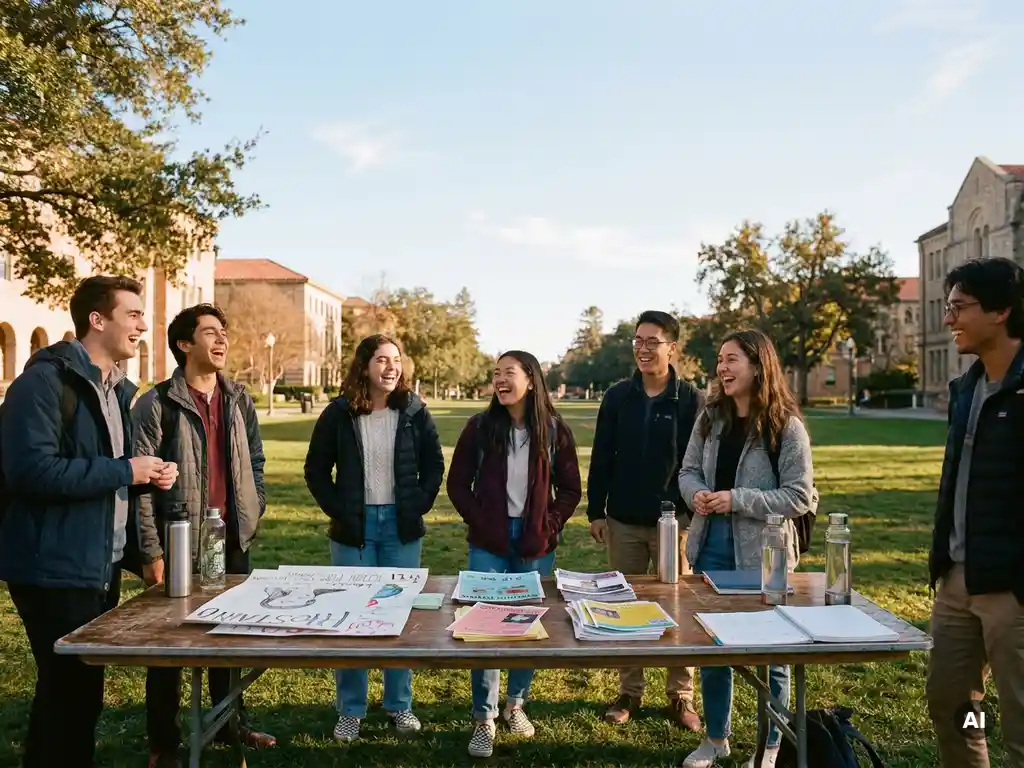
Student clubs genuinely improve your university experience by giving you a structured way to build friendships, develop practical skills, and find your place within a larger community. The academic side of university teaches you to think; clubs give you somewhere to apply that thinking, take initiative, and grow as a person. Below, this article works through the most common questions students have about joining clubs at university, from what is available to how to choose wisely.
What kinds of student clubs are typically available at university?
Universities typically offer student clubs across four broad categories: academic and subject-based societies, cultural and international groups, sports and wellness clubs, and creative or hobby-focused organisations. The range varies by institution, but most campuses support dozens of active groups running alongside the formal curriculum, giving students genuine choice about where to invest their time outside lectures.
Academic societies often mirror degree subjects or interdisciplinary themes, hosting guest speakers, reading groups, and debate events. Cultural clubs celebrate national identities and bring together students from similar backgrounds while welcoming curious outsiders. Sports clubs range from competitive teams to casual fitness groups. Creative clubs cover everything from theatre and film to coding and entrepreneurship.
At a residential liberal arts college, the range of university extracurricular activities tends to be especially broad because the student body itself is intentionally diverse. When students from over 70 nationalities share a campus, the clubs that emerge reflect that variety, spanning languages, artistic traditions, academic passions, and social causes that a more homogeneous campus might never produce.
How do student clubs help you build skills outside the classroom?
Student clubs build skills outside the classroom by placing you in situations where you must take initiative, collaborate with peers, and solve real problems without a grade on the line. Running a club event, managing a budget, leading a team, or organising a campaign develops competencies that academic coursework alone rarely replicates at the same depth or pace.
The specific skills you develop depend on your role and level of involvement, but common gains include:
- Leadership and decision-making: committee roles require you to set priorities, delegate, and take responsibility for outcomes
- Communication: presenting ideas to members, writing newsletters, or pitching to sponsors sharpens both written and verbal skills
- Project management: planning events with real deadlines and limited resources mirrors professional project work closely
- Teamwork and conflict resolution: working with volunteers who have different motivations teaches negotiation and empathy
- Networking: connections formed through clubs often outlast university itself and open doors in unexpected directions
These are precisely the transferable skills that employers consistently describe as difficult to find in graduates. Joining clubs at university is one of the most direct ways to demonstrate that you have developed them through practice rather than theory alone.
Can joining student clubs improve your academic performance?
Yes, joining student clubs can improve academic performance, though the relationship is not automatic. Students who are meaningfully engaged in campus life tend to feel a stronger sense of belonging, which research in higher education consistently links to motivation, persistence, and better results. The key word is meaningfully: clubs that connect to your academic interests or push you to apply course concepts tend to have the clearest positive effect.
A debate club, for example, reinforces the critical thinking and argumentation skills that are central to essay writing and seminar participation. An entrepreneurship society that requires you to pitch a business idea exercises the same analytical and communication muscles as a business or social science course. When academic learning and extracurricular involvement reinforce each other, both improve.
There is also a practical dimension. Students who build strong social networks through clubs are more likely to form study groups, share resources, and support one another through difficult periods. At a small campus where everyone lives and learns in close proximity, these informal academic support networks can be surprisingly powerful.
The caveat is time management. Overcommitting to clubs at the expense of coursework is a real risk, particularly in the first year when students are still finding their rhythm. Choosing one or two clubs and engaging deeply is consistently more valuable than joining many and contributing little to any of them.
How do student clubs help international students feel at home?
Student clubs help international students feel at home by providing an immediate social structure that does not depend on already knowing people. Arriving in a new country for the first time can be disorienting, and clubs offer a ready-made reason to show up, a shared interest to talk about, and a group of people who are equally glad to make new connections.
Cultural clubs and international student societies are an obvious starting point, offering a space to connect with others from similar backgrounds and share familiar traditions. But the more lasting integration often happens through topic-based clubs where nationality is secondary to shared passion. When an international student joins an environmental group, a film club, or a student newspaper, they are engaging with peers on equal terms around something they both care about.
Campus life at university becomes significantly easier when you have a social anchor. For students studying far from home, that anchor is often a club or society rather than a formal programme. The friendships formed in these informal settings frequently become the most enduring part of the university experience, extending well beyond graduation.
At UCR, where students from more than 70 nationalities live and study together on a residential campus, student-led clubs play a central role in weaving that international community together. The small scale of the campus means club members genuinely know one another, which makes the social integration faster and more authentic than on a large, anonymous university campus.
What’s the difference between student clubs and student government?
Student clubs are interest-based groups that form around shared passions, hobbies, or causes, while student government is a formal representative body that advocates for the student population as a whole and works directly with university administration. Both are forms of student-led campus life, but they serve different functions and demand different kinds of involvement.
Student clubs are typically self-organised, with members gathering around a specific activity or theme. Their decisions affect their own members and events. Student government, by contrast, holds an institutional role: it represents student interests in formal meetings, allocates funding to clubs and societies, and acts as a bridge between the student body and university leadership.
In practice, the two often work together. Student government may fund and support clubs, while club leaders sometimes move into student government roles as their ambitions grow. Both develop leadership skills, but student government adds a layer of civic and institutional responsibility that more closely mirrors working within organisations and public bodies after graduation.
For students interested in policy, advocacy, or institutional change, student government is a particularly valuable experience. For those drawn to a specific interest or community, a subject- or culture-based club is often the better fit. Many students find that doing both, at different stages, gives them the broadest perspective on how campus communities actually function.
How do you choose the right student clubs to join?
Choose student clubs by matching your selection to three criteria: genuine interest, available time, and developmental goals. Clubs you join purely for appearance rarely sustain your commitment past the first few weeks. The ones that genuinely shape your university experience are the ones where you show up because you want to, not because you feel you should.
A practical approach to choosing looks like this:
- Attend freshers’ fairs or club showcases without committing: most universities hold an event at the start of the year where clubs present themselves. Collect information, ask questions, and resist signing up for everything at once.
- Try before you decide: most clubs welcome visitors to a session or event before formal membership. Use this to assess whether the culture fits you.
- Think about what you want to develop: if you want to build leadership skills, look for clubs with active committee structures. If you want creative output, look for clubs with regular projects or productions.
- Consider the time commitment honestly: a weekly meeting is very different from a club that expects you to train five days a week or manage a live publication.
- Look for complementarity with your studies: clubs that connect to your academic interests tend to reinforce rather than compete with your coursework.
At a liberal arts college, where the curriculum is already designed to be broad and interdisciplinary, clubs are a natural extension of that philosophy. Students who are already combining courses across fields like data science, sustainability, and media often find that their club involvement follows a similarly eclectic path, reflecting genuine curiosity rather than a narrow specialism.
How UCR supports a rich student club experience
UCR’s residential campus in Middelburg creates the conditions for student clubs to genuinely thrive. With a close-knit community of around 500 students, everyone on campus is reachable, which makes it far easier to build a club, recruit members, and sustain momentum than at a large, dispersed university.
Key features of campus life at UCR that support student club involvement include:
- Guaranteed housing for all students: living on campus means students are always close to club activities, making participation easy and consistent
- A student-led campus culture: UCR’s active student community drives extracurricular life, with clubs and initiatives shaped by students themselves
- A Personal and Professional Development programme: the mandatory skills track complements club involvement by developing communication, teamwork, and adaptability in a structured academic context
- An international community of 70+ nationalities: the diversity of the student body produces clubs that reflect a genuinely global range of interests and perspectives
- A small, connected campus in Middelburg: the city setting and close ties with local organisations mean clubs can extend their impact beyond campus into the wider community
If you are looking for a university where academic ambition and an active campus life genuinely coexist, explore the student life at UCR and discover what a residential liberal arts education looks like in practice.
Related Articles
- What mental health support is available for students in the Netherlands?
- How do student clubs help develop professional skills before graduation?
- How do you get involved in extracurricular activities at university?
- What is the cost of living in Middelburg compared to other Dutch cities?
- What support systems exist for international students adjusting to life in the Netherlands?