


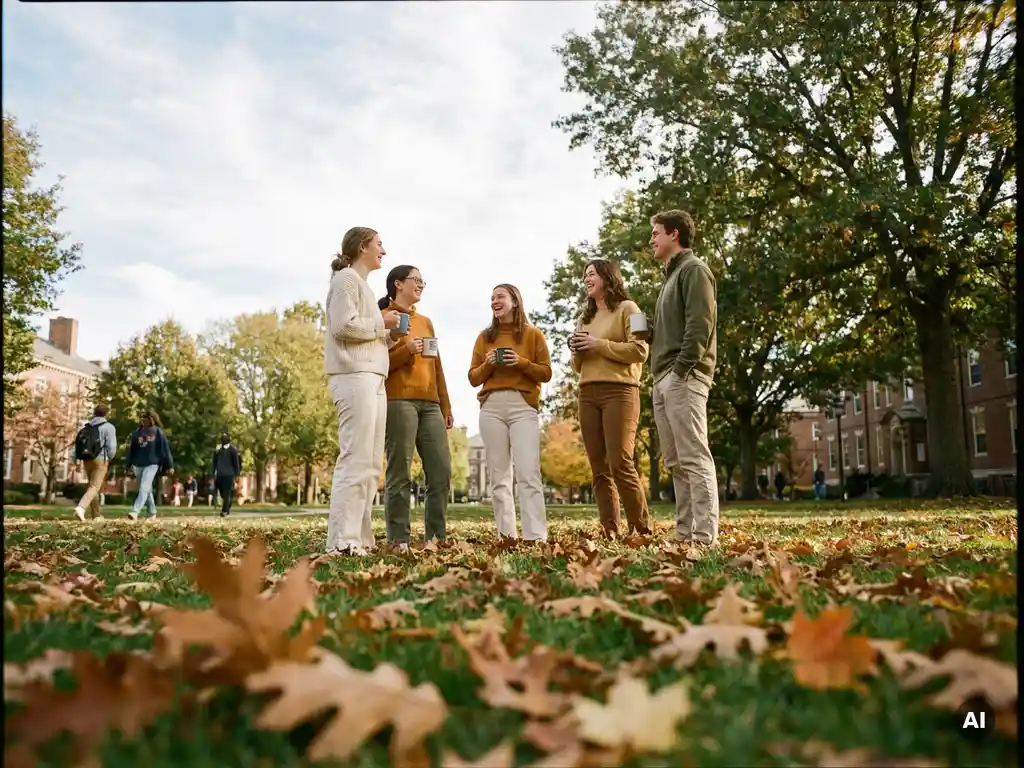
Students can absolutely manage homesickness in a residential college setting, and most do so successfully within the first few weeks to months after arrival. The key is understanding what triggers it, building genuine connections early, and knowing when to ask for help. Below, this article works through the most common questions students and families have about homesickness at university.
What actually triggers homesickness in a residential college?
Homesickness in a residential college is triggered by the sudden absence of familiar people, places, and routines rather than by the college environment itself. Moving into student housing means leaving behind family, close friends, a childhood bedroom, and the daily rhythms that once felt automatic. That loss of predictability is the root cause, not the new place.
Several specific factors tend to intensify the feeling in the early weeks:
- Loss of routine: Meals, sleep schedules, and social time all shift dramatically when students move out of the family home for the first time.
- Social uncertainty: Not yet knowing anyone well enough to feel genuinely comfortable creates a low-level but persistent sense of loneliness.
- Academic pressure: The jump in workload and independence at university level can amplify emotional vulnerability.
- Environmental unfamiliarity: New sounds, a new city, unfamiliar food, and sometimes a new language all add cognitive load that leaves less emotional resilience.
- Comparison with expectations: When the reality of college life does not immediately match the exciting image a student had imagined, disappointment can tip into homesickness.
For international students especially, these triggers stack. Adjusting to college life in a country where the culture, language, and social norms differ from home means managing several layers of unfamiliarity at once. Recognising the specific trigger rather than treating homesickness as one undifferentiated feeling makes it much easier to address.
How long does homesickness typically last at university?
For most students, homesickness at university peaks in the first two to four weeks and fades significantly within the first semester as new friendships form and routines settle in. It is rarely a permanent state. The intensity and duration vary depending on how far a student has moved, whether this is their first time living away from home, and how quickly they find their social footing.
A smaller number of students experience a second wave of homesickness after the initial excitement of arrival wears off, often around weeks four to six when novelty has faded but deep friendships have not yet fully formed. This mid-adjustment dip is normal and tends to resolve once students invest more actively in campus life.
In a minority of cases, homesickness persists beyond the first semester and begins to interfere with academic performance, sleep, or daily functioning. When that happens, it has moved from a normal adjustment challenge into something that benefits from professional support. The timeline matters because it helps students and their families calibrate expectations: feeling homesick in week two is not a sign that the college was the wrong choice.
What coping strategies help students manage homesickness?
The most effective coping strategies for managing homesickness at university combine maintaining meaningful contact with home, building new connections on campus, and establishing a personal routine as quickly as possible. No single strategy works for everyone, but students who actively pursue all three areas tend to adjust faster than those who rely on just one.
Stay connected with home, without overdoing it
Regular but bounded contact with family and friends back home provides emotional continuity without preventing adjustment. Scheduling a weekly video call, for example, gives something to look forward to without making it tempting to retreat into home life every time things feel difficult. Constant, unscheduled contact can actually slow adjustment by making the new environment feel like a temporary inconvenience rather than a real home.
Build new routines and social habits on campus
Joining a student club, attending campus events, or simply committing to eating meals with others rather than alone accelerates the process of feeling settled. Residential college settings are particularly well suited to this because students live alongside their peers, which creates natural, low-pressure opportunities for connection every day. The goal is not to replace home but to build a second place that also feels like belonging.
Other strategies students find useful include:
- Personalising their living space to make it feel less generic and more theirs
- Exercising regularly, which has a well-established effect on mood and stress resilience
- Keeping a journal or creative outlet to process the emotional transition
- Limiting social media comparisons with peers who appear to be thriving instantly
- Giving themselves permission to feel homesick without interpreting it as failure
How does a close-knit campus community reduce feelings of isolation?
A close-knit campus community reduces feelings of isolation by shortening the time it takes for a new student to move from stranger to known member of a group. In a small residential college, students encounter the same faces in class, in the dining hall, in the corridors, and at campus events. That repeated, low-stakes contact builds familiarity quickly, and familiarity is the precondition for friendship.
Scale matters enormously here. At a large university with tens of thousands of students, a new arrival can feel invisible for months. In a smaller residential setting, the community is compact enough that students are noticed, remembered, and included far sooner. Faculty and staff who live nearby and engage personally with students also contribute to that sense of being known rather than anonymous.
Student-led culture plays an equally important role. When students themselves organise events, run societies, and take initiative on campus life, the community feels genuinely inhabited rather than institutional. This gives new arrivals multiple entry points: there is almost always something happening that matches an interest, which means belonging does not depend on a single social group accepting you.
For international students managing homesickness in a residential college, a community with many nationalities represented also normalises the experience of being far from home. When the majority of your peers are also navigating a new country and culture, the adjustment feels less isolating and more like a shared adventure.
When should a student seek professional support for homesickness?
A student should seek professional support for homesickness when the feelings persist beyond the first semester, begin to interfere with academic work or daily functioning, or are accompanied by symptoms of depression or anxiety such as persistent low mood, sleep disruption, loss of appetite, or withdrawal from social contact. Homesickness that crosses these thresholds has moved beyond a normal adjustment phase.
It can be difficult to know where the line is. A useful question to ask is whether the difficult feelings are getting gradually better over time or staying the same and deepening. Improvement, even slow improvement, suggests normal adjustment. A plateau or decline after several weeks suggests something more is happening and warrants a conversation with a counsellor or student wellbeing service.
Students often hesitate to seek help because they feel they should be able to manage on their own, or because they worry about being seen as struggling. Both concerns are understandable, and both are worth setting aside. Seeking support early is consistently more effective than waiting until homesickness has affected grades, relationships, or physical health. Most universities provide confidential counselling services precisely because the emotional transition into residential college life is genuinely challenging, not because something has gone wrong with the student.
Talking to a trusted member of staff, a personal tutor, or a peer support contact can also be a first step before formal counselling. The important thing is not to stay silent while the situation worsens.
How UCR helps students feel at home
University College Roosevelt is designed around the conditions that make adjusting to college life manageable. For students concerned about homesickness in a residential college setting, UCR offers several structural advantages:
- Guaranteed housing for all students for the full duration of their studies, meaning every student lives within the same close-knit campus community in Middelburg from day one
- A small community of around 500 students across more than 70 nationalities, so no one is navigating the international experience alone
- A mandatory Personal and Professional Development track that builds communication, adaptability, and resilience skills from the first semester
- Dutch language courses for international students to ease the cultural and practical transition into life in the Netherlands
- An active, student-led campus culture with clubs, events, and community-engaged learning that create natural entry points for belonging
- Faculty and staff who live near or on campus, keeping communication lines short and support genuinely accessible
If you are curious about what student life really looks like day to day, explore the UCR student experience and find out how the community comes together both inside and outside the classroom.
Related Articles
- How do student traditions shape campus culture over time?
- Why should university students join a sports team or club?
- What is the role of a student board in campus governance?
- What role does sport play in the social life of university students?
- How do students from different countries adapt to life in the Netherlands?