


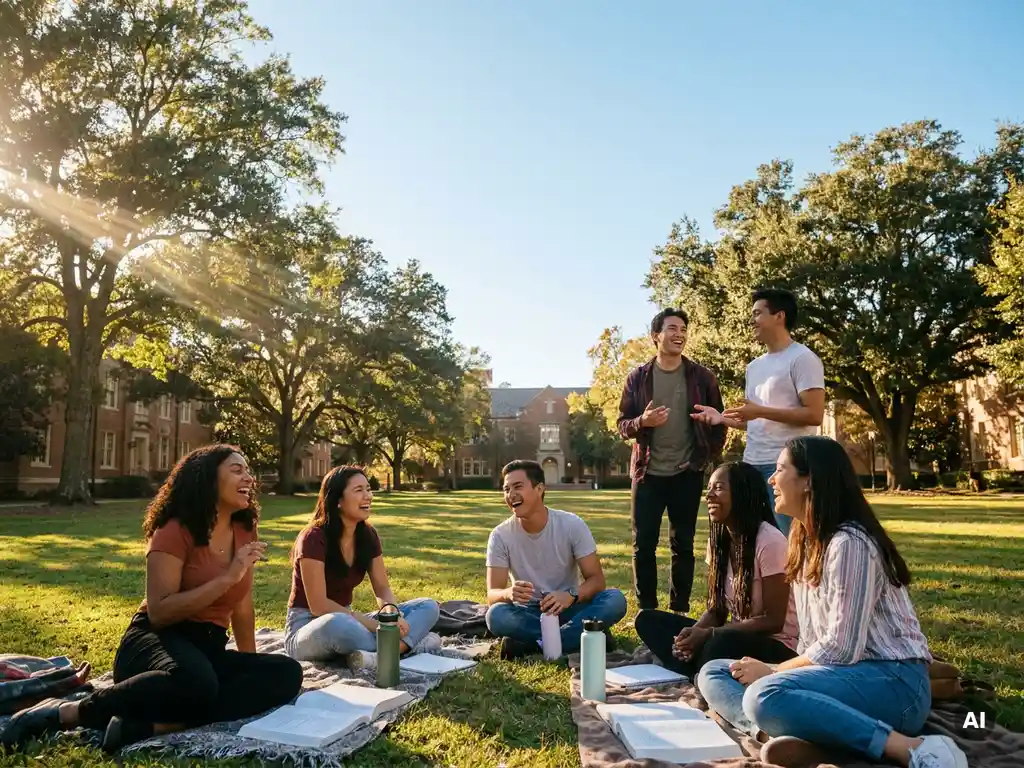
University students in 2026 have access to a wide range of social activities, from student clubs and sports teams to community events, cultural celebrations, and informal campus gatherings. The specific options vary by institution, but most universities offer structured extracurricular programmes alongside spontaneous, student-led social life. This article breaks down the most common types of social activities, how they shape the student experience, and why they matter beyond just having fun.
What types of social activities do university students typically join?
University students typically join clubs and societies, sports teams, volunteer groups, cultural associations, and creative or performing arts groups. These social activities for university students range from academically oriented debate clubs and model UN societies to casual hobby groups, film clubs, and student-run events. Most universities also host regular social events such as open mic nights, themed parties, and international festivals.
The variety is intentional. Universities design extracurricular programmes to complement academic study by giving students structured ways to meet people outside the classroom. Common categories include:
- Academic and professional clubs: debate societies, entrepreneurship clubs, model UN, writing groups
- Sports and fitness: team sports, individual athletics, yoga, martial arts
- Cultural and identity groups: international student associations, language exchange programmes, cultural celebration events
- Arts and creativity: theatre, music ensembles, photography clubs, student publications
- Community and volunteering: sustainability initiatives, local outreach, social justice campaigns
- Social and lifestyle: board game nights, hiking groups, cooking clubs, film screenings
At smaller residential colleges, these activities tend to be more accessible and more tightly woven into daily life, because the student body is compact enough for everyone to know each other and get involved quickly.
How does campus life shape a student’s social experience?
Campus life shapes a student’s social experience by creating a shared environment where academic, personal, and social development happen simultaneously and reinforce each other. When students live, study, and socialise in the same place, relationships form faster and run deeper. The physical and social structure of a campus determines how often students cross paths, how easy it is to get involved, and how supported they feel.
Residential campuses in particular accelerate social bonding. When housing is guaranteed and located on or near campus, students do not have to commute or navigate a fragmented city life. Instead, the campus itself becomes their social world. Meals, study sessions, spontaneous hallway conversations, and late-night discussions all happen within the same community, creating a rhythm of connection that is difficult to replicate in a commuter setting.
The size of a campus also matters significantly. At large universities with tens of thousands of students, social life can feel overwhelming or anonymous. At smaller institutions, a student is far more likely to encounter familiar faces, build genuine friendships, and feel genuinely part of a community. This sense of belonging has a measurable effect on student motivation, mental health, and academic persistence.
Student-led culture amplifies this further. When students organise their own events, run their own clubs, and take ownership of campus life, the social environment becomes dynamic and responsive to what the community actually wants rather than what the administration assumes it needs.
What social activities are available for international students specifically?
International students have access to a growing range of social activities designed to ease cultural transition and build cross-cultural connections, including international orientation programmes, language exchange events, cultural celebration nights, and intercultural dialogue workshops. These campus activities help international students find community quickly while also enriching the social experience for domestic students.
Beyond dedicated international programmes, the most valuable social activities for international students are often the general ones: joining a sports team, participating in a student project, or attending a campus dinner. These everyday interactions are where lasting friendships form, because they are built around shared interests rather than shared nationality.
At institutions with a genuinely international student body, the social environment itself becomes the activity. When over 70 nationalities are represented in a single campus community of around 500 students, every conversation is a cross-cultural exchange. Students learn to navigate different communication styles, celebrate unfamiliar traditions, and develop the kind of cultural empathy that no classroom exercise can fully replicate.
Language support also plays a social role. Programmes that offer host-country language courses, such as Dutch language classes for international students studying in the Netherlands, help students engage more confidently with the local community beyond campus, opening up an entirely new layer of social experience in the surrounding city and region.
How do extracurricular activities benefit university students academically?
Extracurricular activities benefit university students academically by developing transferable skills such as time management, communication, leadership, and collaborative problem-solving that directly strengthen academic performance. Students who are actively engaged in campus life tend to be more motivated, more organised, and better at working under pressure than those who focus exclusively on coursework.
The connection between social engagement and academic success is well established in higher education research. Involvement in student clubs and societies encourages students to practise skills in real contexts: a student running a debate club learns to construct arguments; one organising a cultural event learns project management; one volunteering in the community learns to apply theoretical knowledge to practical situations.
There is also a motivational dimension. Students who feel connected to their campus community are more likely to persist through academic difficulty, seek help when they need it, and stay engaged with their studies over the full duration of their degree. Social belonging and academic confidence tend to reinforce each other.
Some universities formalise this connection by integrating community engagement, group projects, and real-world problem-solving directly into the curriculum. When extracurricular and academic life are not treated as separate tracks but as parts of the same developmental journey, students benefit from both simultaneously.
What social activities support student wellbeing at university?
Social activities that support student wellbeing at university include regular physical activity, peer support networks, creative outlets, community service, and informal social gatherings that reduce isolation and build a sense of belonging. Student wellbeing is closely linked to social connection, and universities that invest in a vibrant social life are also investing in the mental health of their student body.
Structured wellbeing programmes matter, but so do the unstructured moments: a shared meal, a walk with a friend, a spontaneous evening event. These informal interactions are often what students remember most and what sustains them through the harder periods of university life.
Physical activity is consistently one of the most effective wellbeing supports available to students. Whether through organised sports, campus fitness facilities, or outdoor activities, regular movement reduces stress, improves sleep, and creates natural social opportunities. Universities that make sport accessible and social, rather than purely competitive, tend to see higher participation rates across the student body.
Personal development programmes also play a meaningful role. When students are supported in building self-awareness, communication skills, and emotional resilience alongside their academic studies, they are better equipped to manage the social and psychological demands of university life. This kind of holistic support recognises that student wellbeing is not separate from learning. It is a precondition for it.
How UCR supports student social life and wellbeing
University College Roosevelt is built around the idea that academic growth and personal development happen together, not in parallel. For students who want a rich, connected university experience, UCR offers:
- Guaranteed housing on a vibrant inner-city campus in Middelburg, creating a close-knit residential community from day one
- A student-led campus culture with over 70 nationalities and an active social scene shaped by the students themselves
- A mandatory Personal and Professional Development track that builds communication, teamwork, and adaptability alongside academic study
- Community Engaged Learning that connects students with local government, businesses, and organisations in Zeeland
- Dutch language courses for international students to engage more fully with life beyond campus
- Exchange partnerships with institutions including Bard College in New York and Glendon College in Toronto
With only around 500 students, every person at UCR has the opportunity to be genuinely involved, not just a face in a crowd. If you are looking for a university experience where social life, personal growth, and academic ambition come together, discover the UCR experience and find out whether it is the right fit for you.
Related Articles
- Can you combine data science and sustainability at university?
- What is an OV-chipkaart and how do students use it?
- What is the value of joining a student society in your first semester?
- How do small campus communities support first-year students?
- What are the most popular student clubs at small liberal arts colleges?