


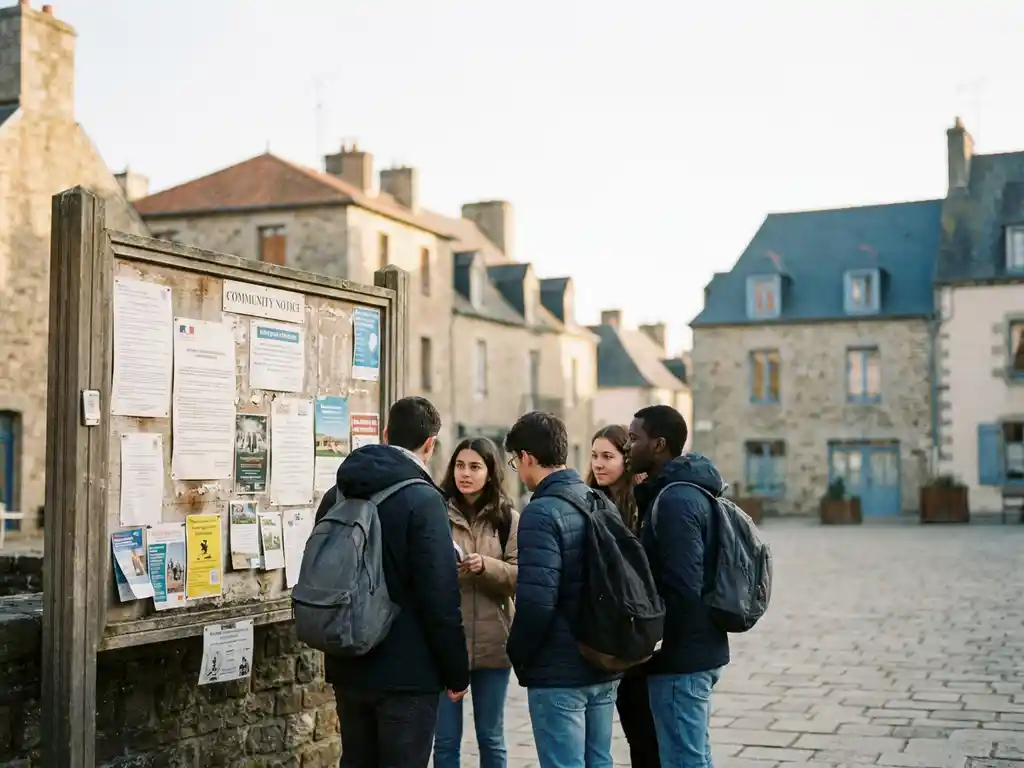
Navigating Dutch bureaucracy as a first-time international student requires completing several administrative steps in a specific order: registering with your local municipality, obtaining a BSN (citizen service number), setting up a DigiD digital identity, and arranging health insurance. Most of these steps can only be completed after you physically arrive in the Netherlands, so knowing the sequence in advance saves a great deal of confusion. The sections below walk through each process clearly, so you arrive prepared rather than overwhelmed.
What documents do international students need before arriving in the Netherlands?
Before arriving in the Netherlands, international students need a valid passport, their university acceptance letter, proof of accommodation, and — depending on their nationality — either a valid visa or a residence permit (MVV). EU and EEA students can enter and study without a visa, while non-EU students typically need to arrange their entry documents before departure.
Here is a practical checklist of documents to prepare before you travel:
- Valid passport — must remain valid throughout your studies
- University acceptance letter — official confirmation of your enrollment
- Proof of accommodation — a rental contract or confirmation of guaranteed student housing
- MVV (Machtiging tot Voorlopig Verblijf) — a provisional residence permit for non-EU students; your university typically sponsors this
- Health insurance documentation — proof of coverage, especially if arriving from outside the EU
- Passport-sized photographs — needed for various administrative processes upon arrival
- Financial proof — bank statements or scholarship letters showing you can support yourself
Non-EU students should be aware that the MVV process is usually handled in cooperation with their university. UCR, for example, works directly with students to coordinate the residence permit application through Utrecht University’s international office, which reduces the administrative burden considerably. Start this process as early as possible — ideally several months before your intended arrival date.
How does municipality registration (BRP) work for international students?
Municipality registration in the Netherlands, known as BRP (Basisregistratie Personen or Personal Records Database), requires international students to register at their local city hall within five days of arriving in the country. Registration is mandatory for anyone staying in the Netherlands for more than four months, and it is the gateway to almost every other administrative process.
To register with the BRP, you will need to visit the gemeente (municipality) office in the city where you live. For students at UCR, this means registering with the Gemeente Middelburg. The process involves:
- Booking an appointment at the municipality office — walk-ins are rarely accepted
- Bringing your passport and proof of your Dutch address (such as a housing contract)
- Completing a registration form, which staff will help you fill in
- Receiving confirmation of your registration, usually on the same day
Once registered, your details are entered into the national database and you are assigned a BSN number (see the next section). Without BRP registration, you cannot open a Dutch bank account, access healthcare through the Dutch system, or apply for a DigiD. Think of it as the administrative foundation everything else is built on.
One practical note: bring original documents, not photocopies. Dutch municipal offices require originals for verification, and arriving without them means rescheduling your appointment and delaying the entire chain of administrative steps that follows.
What is a BSN number and why do international students need one?
A BSN (Burgerservicenummer) is a unique personal identification number issued to everyone registered in the Dutch population database. International students in the Netherlands need a BSN to work part-time, access healthcare, open a Dutch bank account, file taxes, and interact with almost any official institution. It is the Dutch equivalent of a national identification number.
You do not apply for a BSN separately. It is automatically assigned to you when you complete your BRP municipality registration. Once you have registered at the gemeente, your BSN is typically included in your registration confirmation or sent to you shortly afterward.
Your BSN will be required in a wide range of practical situations, including:
- Registering with a Dutch general practitioner (huisarts)
- Taking out Dutch health insurance
- Opening a bank account at institutions like ING, Rabobank, or ABN AMRO
- Applying for a DigiD digital identity
- Receiving any Dutch government benefits or allowances you may be entitled to
- Working part-time alongside your studies
Keep your BSN in a safe place and memorize it if you can. You will be asked for it regularly throughout your time in the Netherlands, and having it on hand speeds up every interaction with Dutch institutions significantly.
How do you get a DigiD as an international student in the Netherlands?
A DigiD is a digital identity system that allows you to log in securely to Dutch government websites and services. International students can apply for a DigiD online at digid.nl once they have a BSN number and a Dutch address registered in the BRP. The process takes about five working days and requires a verification letter sent to your registered address.
Here is how the application process works step by step:
- Go to digid.nl and click on “Aanvragen” (Apply)
- Enter your BSN, date of birth, and Dutch postal address
- Create a username and password
- Wait for a verification letter to arrive at your registered address — this usually takes three to five working days
- Use the activation code in the letter to complete your DigiD setup online
Once activated, your DigiD gives you access to services like the Dutch Tax Authority (Belastingdienst), the healthcare allowance portal (zorgtoeslag), and various municipal services. For international students, DigiD is particularly useful when applying for a healthcare allowance, which can offset a significant portion of your monthly insurance costs.
Non-EU students with a temporary residence permit can still apply for DigiD, provided they are registered in the BRP. If your application is rejected or delayed, it is usually because your BRP registration has not yet been fully processed — wait a few days and try again before contacting the DigiD helpline.
What health insurance are international students in the Netherlands required to have?
Health insurance requirements for international students in the Netherlands depend on their nationality and employment status. EU students and non-EU students who are not working in the Netherlands are not required to take out Dutch health insurance (zorgverzekering), but they must have equivalent coverage from their home country or an international student insurance plan. Non-EU students who work more than 16 hours per week are generally required to take out Dutch insurance.
EU and EEA students
EU and EEA students can use their European Health Insurance Card (EHIC) for short-term medical needs, but the EHIC does not cover everything and is not a substitute for comprehensive coverage during a multi-year degree. Most EU students take out supplementary international student insurance to cover gaps, particularly for dental care, mental health support, and repatriation.
Non-EU students
Non-EU students who are not employed in the Netherlands are not legally required to take out Dutch health insurance, but they must demonstrate that they have adequate coverage as part of their visa conditions. Many choose an international student health insurance plan specifically designed for students studying abroad. If you do take on part-time work exceeding the threshold set by Dutch law, you become liable for Dutch insurance and must register with a Dutch insurer within four months of starting work.
Regardless of your situation, registering with a local general practitioner (huisarts) early is strongly recommended. In the Dutch healthcare system, your GP is the gatekeeper to all other medical services, and without one you will face significant barriers accessing care when you need it.
Where should international students go if something goes wrong with Dutch admin processes?
When something goes wrong with Dutch administrative processes, international students should first contact their university’s international student services office, then the relevant Dutch institution directly. Most problems — delayed BSN numbers, DigiD activation failures, or BRP registration errors — have straightforward solutions once you know which office to contact.
Here is a practical guide to who handles what:
- BRP registration issues: Contact the Gemeente Middelburg (or your local gemeente) directly. Bring all original documents and ask for clarification in writing.
- BSN delays: If your BSN has not arrived within two weeks of BRP registration, contact the gemeente office where you registered.
- DigiD problems: The DigiD helpline (available in Dutch and English) can resolve most activation and login issues. Visit digid.nl for contact options.
- Health insurance questions: Your university’s international office can advise on whether you are required to take out Dutch insurance and which providers are commonly used by students.
- Residence permit complications: Contact the IND (Immigratie en Naturalisatiedienst) directly, or ask your university’s international office to liaise on your behalf.
It is also worth knowing that the Netherlands has a national information line for government services called 1400, where Dutch-speaking staff can redirect you to the right office. For English-language support, many municipalities and institutions offer English-language appointments on request — always ask, as this option is not always advertised prominently.
Peer support is another underrated resource. Fellow international students who arrived a semester or year earlier have often navigated the same challenges and can offer practical, first-hand guidance on what worked and what to avoid.
How UCR helps international students with Dutch administrative processes
Settling into a new country involves more than academics, and UCR actively supports students through the practical side of arriving in the Netherlands. As a small residential college with around 500 students, UCR is well positioned to offer personalized guidance that larger universities simply cannot match.
- Pre-arrival guidance: UCR provides incoming students with clear information on the documents they need and the steps to complete before and after arrival
- Residence permit coordination: For non-EU students, UCR works with Utrecht University to coordinate the MVV and residence permit process
- Guaranteed housing: All students receive confirmed accommodation, which means you have a registered Dutch address from day one — a prerequisite for BRP registration and every step that follows
- Dutch language courses: UCR offers Dutch language courses specifically for international students, helping you communicate with local institutions and settle into life in Zeeland
- Personal and Professional Development programme: This mandatory track includes practical life skills that support your transition to independent living in a new country
- Small campus community: With staff and faculty often living nearby, students have direct access to people who know the local systems and can point you in the right direction
Navigating Dutch bureaucracy is manageable when you have the right support around you. If you want to learn more about what life as an international student at UCR looks like, or if you have questions about the admissions process, get in touch with the UCR team directly — they are happy to help you prepare for every aspect of your move to the Netherlands.
Related Articles
- Is studying in the Netherlands worth it for international students?
- What is the Dutch healthcare system like for international students?
- What is BSN and why do international students in the Netherlands need it?
- What groceries and everyday items should you bring from home to the Netherlands?
- What is the difference between a Dutch residence permit and a student visa?